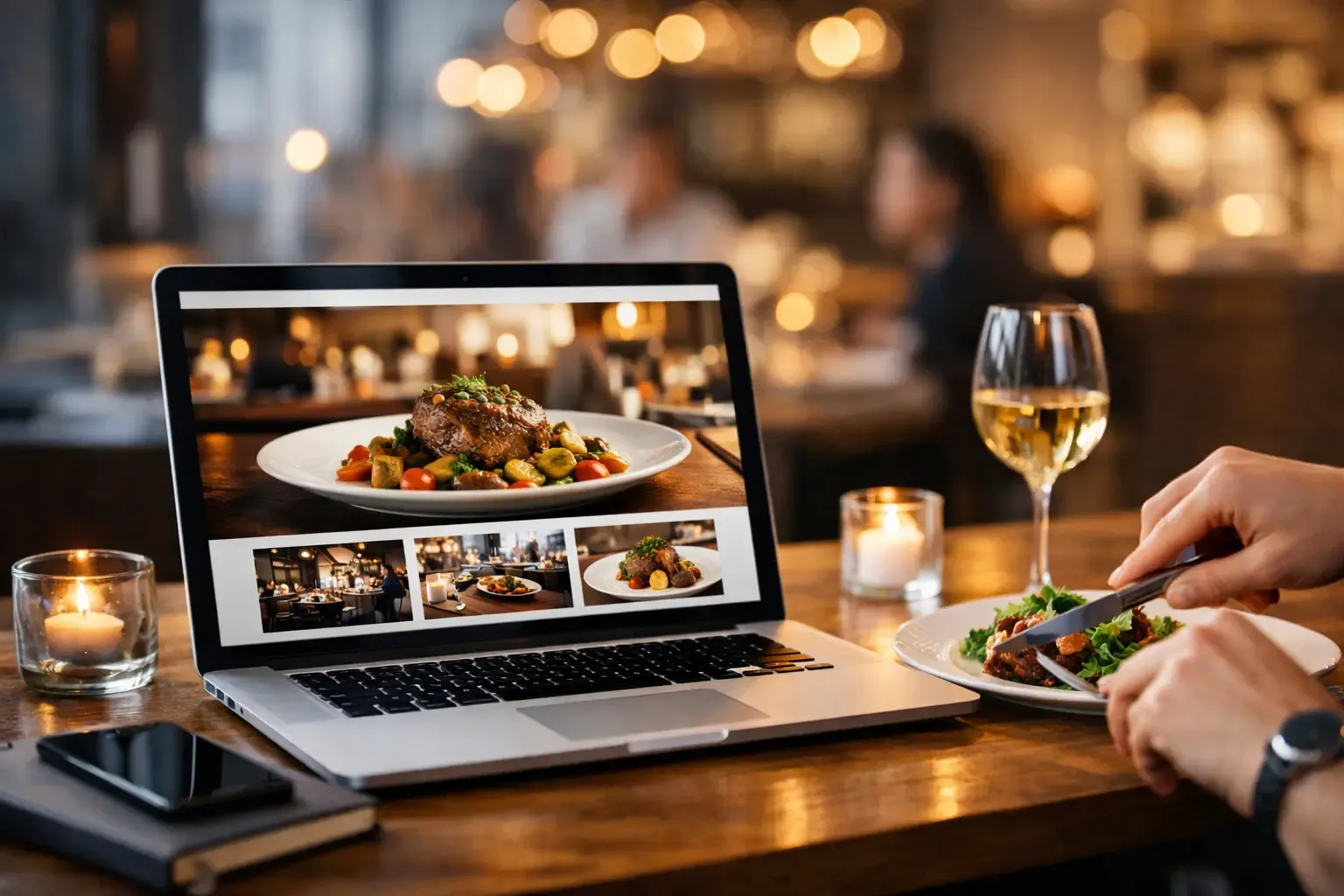
A guest hears about your restaurant at 9:40 p.m., checks your site on a phone, and decides in less than a minute whether to reserve a table, place an order, or keep scrolling. That is the real job of website design for restaurants. It is not a digital brochure. It is a revenue tool operating when your host stand, manager, and marketing team are off the clock.
For restaurant operators, the website has to carry more than a brand story. It must answer practical guest questions quickly, support the way the business actually runs, and direct traffic toward profitable actions. A beautiful site that hides the menu, sends guests to a dead reservation link, or makes parking impossible to find is not good design. It is a leak in the operation.
Start With the Guest's Decision Path
Most restaurant websites fail because they are designed around what the owner wants to say rather than what the guest needs to do. A guest may be trying to decide where to eat tonight, plan a private event, confirm whether the bar is open late, or check whether a dietary accommodation is available. The site should make those answers immediate.
The primary actions should be obvious above the fold on mobile: reserve, order, view menu, get directions, and contact the restaurant. Which action comes first depends on the concept. A full-service restaurant built around reservations should lead with booking. A fast-casual concept may prioritize online ordering. A nightclub restaurant may need upcoming events, table inquiries, and dress-code information in front of everything else.
This is where strategy matters. Do not copy the structure of a competitor's site because it looks current. Build around the customer journey and the revenue model. If private dining produces high-margin sales, the site should not bury event inquiries in a generic contact form. If late-night traffic is a core daypart, the hours and entertainment schedule need to be impossible to miss.
Website Design for Restaurants Must Work on Mobile
Restaurant traffic is overwhelmingly mobile and usually time-sensitive. Guests may be standing on the sidewalk, sitting in a rideshare, or trying to settle a group decision at the office. They are not looking for a cinematic homepage experience that takes ten seconds to load.
Mobile-first design means the site is planned for a small screen before it is expanded for desktop. Buttons need enough spacing to tap accurately. Type must be readable without pinching and zooming. Menus need to load quickly and remain legible. Reservation and ordering links must open without forcing the guest through unnecessary screens.
Speed is not a cosmetic issue. Large image files, autoplay video, excessive animations, and poorly managed plug-ins can slow the site and cost the operator real transactions. A guest who cannot load a menu during a lunch break will choose the place that can. The trade-off is straightforward: use photography and motion where they create appetite and reinforce the concept, but do not let visual ambition interfere with a guest's ability to act.
Make the Menu Useful, Not Decorative
The menu is often the most visited page on a restaurant website. Yet it is routinely handled as an afterthought: a low-resolution PDF, an outdated upload, or an image that cannot be read on a phone.
A strong menu page is organized, current, and easy to scan. It should reflect actual service periods, including brunch, happy hour, late-night, catering, and beverage programming when relevant. Prices, item descriptions, dietary markers, and availability notes should be maintained with the same discipline applied to printed menus.
PDFs can work for a highly designed tasting menu or wine list, but they should not be the only option for core navigation. Searchable web menus are easier for guests to use and simpler to update. They also reduce calls to the restaurant from people asking basic questions your site should already answer.
Menu accuracy matters operationally. If your website advertises an item that was removed two months ago, the guest arrives with a broken expectation before service begins. That puts pressure on the host, server, kitchen, and manager for a mistake that started online.
Build Around Revenue, Not Vanity Metrics
Traffic alone does not pay rent. The question is whether the site converts qualified visitors into reservations, orders, event leads, gift card purchases, and repeat guests.
Every core page should have a clear next step. The home page might direct a diner to reserve. The private events page should invite a qualified inquiry with guest count, date, event type, and budget range. The catering page should help the buyer understand minimums, lead times, service options, and ordering steps before they contact your team.
Avoid forms that ask for everything under the sun. Long forms discourage response, especially on mobile. Ask for the details required to qualify and route the lead, then make sure someone owns the follow-up process. A website can generate opportunities, but it cannot compensate for an inbox nobody monitors.
Measurement should be tied to operating outcomes. Track reservation clicks, online order starts, event inquiries, calls, direction requests, and gift card sales. Then compare that activity with sales mix, daypart performance, and marketing spend. If a campaign drives visitors but few reservations, the issue may be the campaign, the offer, the landing page, or the booking process. Good operators diagnose before they spend more.
Protect the Guest Experience Before Arrival
A restaurant website sets expectations. That makes operational information part of the brand, not a footnote.
Hours should be accurate, including holiday changes and kitchen-versus-bar service when they differ. Include the address, parking guidance, valet details, transit information, accessibility information, age restrictions, dress expectations, and policies that regularly create friction. If the restaurant does not take reservations after a certain time, say so clearly. If a large-party policy requires a deposit, explain it before the guest gets to the final step.
This is especially important for concepts with complex operations. Hotels, entertainment venues, rooftop bars, tasting rooms, and restaurants inside mixed-use properties can create confusion even when the food and service are excellent. Clear pre-arrival information reduces no-shows, frustrated calls, late arrivals, and front-door conflict.
Photography should also tell the truth. Guests do not expect every plate to look identical to a campaign image, but they do expect the atmosphere, service style, and food category to match what they saw online. A site full of dark, moody cocktail photography that leads to a brightly lit family dining room creates a credibility problem. Position the experience honestly, then present it at its best.
Connect the Site to the Operation
The best restaurant websites are maintained like any other critical operating system. They are connected to reservations, ordering, event sales, email capture, analytics, and social channels without becoming dependent on any one platform.
Integration requires judgment. Third-party ordering and reservation platforms can reduce setup time and add convenience, but they may also add fees, limit guest-data ownership, or create inconsistent branding. There is no universal answer. A single-unit restaurant with limited internal resources may benefit from proven third-party tools. A growing multi-unit group may need more control, stronger reporting, and a cleaner path for guest data across locations.
Assign ownership before launch. Someone needs authority to update seasonal menus, adjust hours, replace expired promotions, review broken links, and respond to inbound leads. A website launch is not the finish line. It is the start of a recurring management responsibility.
At Step It Up Strategies, we approach website work the same way we approach a dining room, menu, or financial model: the guest-facing experience has to support the operating model behind it. Design decisions should make service easier, sales clearer, and management more accountable.
What to Fix First When the Site Is Underperforming
If the current site is not producing, do not start with a complete visual overhaul. Start with the points of friction that block revenue. Confirm that hours, menus, location details, reservation links, and ordering paths are accurate. Test every action on a phone. Submit the event form and see where it goes. Call the listed number. Review the site as a guest who has never visited before.
Then look at the business priorities. A restaurant fighting soft weekday sales may need a sharper happy-hour or group-dining path. A new concept may need clearer positioning and stronger local discovery fundamentals. A restaurant with strong traffic but weak conversion may need less clutter, better menu access, and a more direct reservation experience.
The right website does not need to impress a designer. It needs to make it easier for the right guest to choose your restaurant, arrive prepared, spend confidently, and come back.