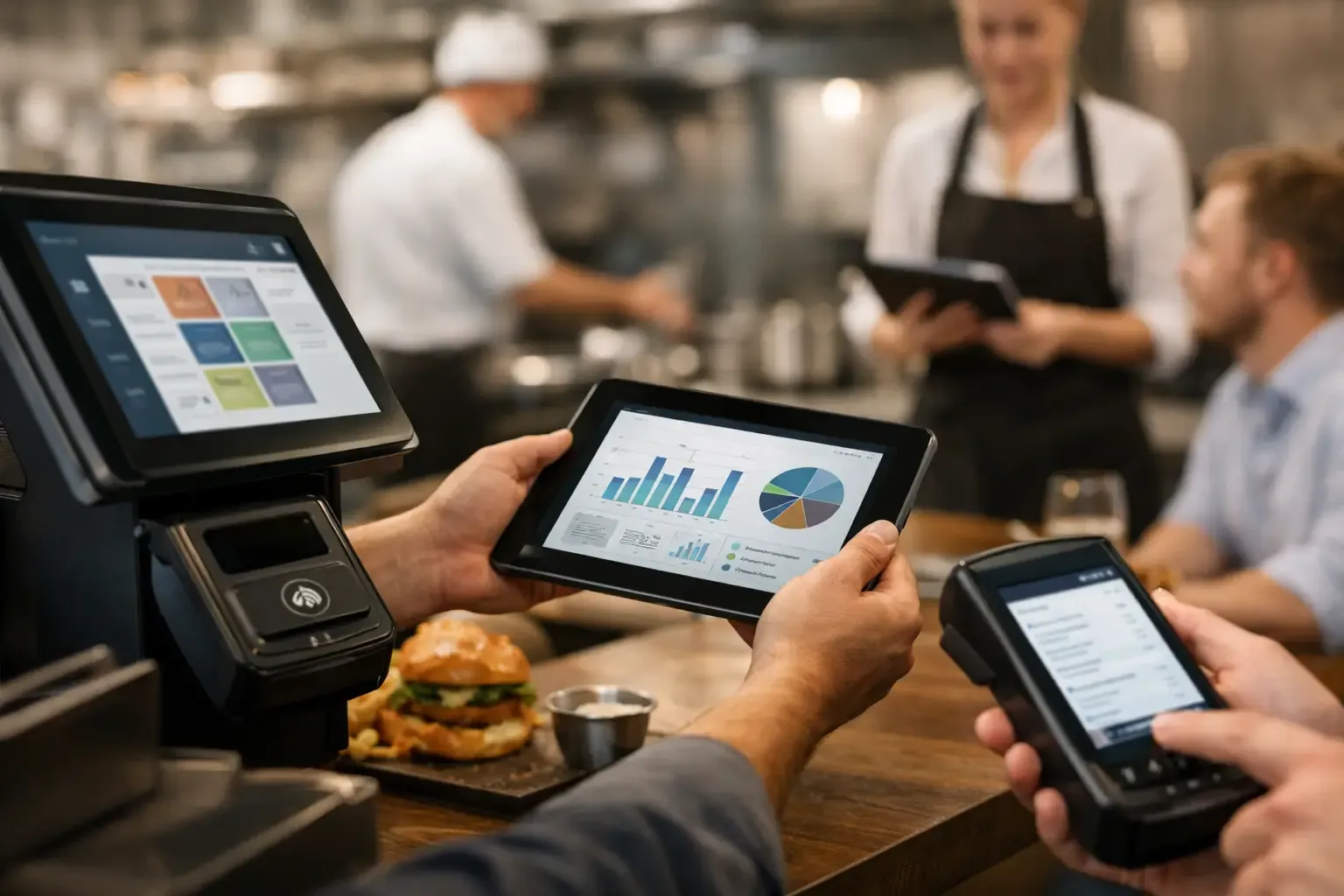
A Friday dinner rush exposes every weak decision in your technology stack. The tablet that loses its connection, the online order that prints twice, the manager who cannot see labor climbing by the hour - these are not minor annoyances. They create longer ticket times, comped meals, frustrated employees, and margin loss.
Restaurant technology trends are worth watching, but operators should not chase them because a vendor demo looks polished. The right question is simpler: Will this tool help the team execute better, give leadership cleaner information, or improve a measurable financial result? If the answer is unclear, it is probably not the next investment your operation needs.
Restaurant Technology Trends With Real Operating Value
The most useful technology is moving from isolated software toward connected operating systems. Point-of-sale data, labor scheduling, inventory, accounting, reservations, loyalty, and digital ordering increasingly need to talk to one another. That does not mean every operator needs an enterprise platform. It means the numbers used to make decisions should reconcile, arrive on time, and require less manual cleanup.
For an independent full-service restaurant, the priority may be tighter purchasing and recipe-cost control. For a multi-unit fast-casual brand, it may be order throughput, channel reporting, and consistent labor deployment. A nightclub may get more value from table management, payment speed, and beverage variance reporting than from a sophisticated kitchen display system.
Technology should follow the operating model, not define it.
Connected POS, inventory, and accounting data
A POS system is no longer just a place to ring sales. It is the transaction engine for menu mix, discounts, voids, labor reporting, guest check averages, payment activity, and daypart performance. When its data connects reliably to inventory and accounting processes, management can move from reviewing last month's results to correcting this week's performance.
The value is in the discipline around the data. Menu items need clean mapping. Modifier rules need to reflect how the kitchen actually produces food. Discounts need ownership and approval limits. Vendor invoices need to be coded consistently. If those foundations are weak, more integrations simply move bad information faster.
Operators should focus on a practical scorecard: sales by channel, prime cost, theoretical versus actual food and beverage cost, labor by daypart, average check, discount rate, voids, and cash over-short. Those measures are not glamorous, but they tell leadership whether the business is controlled.
Kitchen display systems built for throughput
Kitchen display systems have matured beyond replacing paper tickets. Used well, they can organize production by station, flag long ticket times, manage coursing, route off-premise orders, and show where bottlenecks develop during peak periods.
But a screen will not solve a poorly designed line, an overcomplicated menu, or a prep plan that does not match sales volume. Before adding more screens, watch the actual flow: where tickets stall, where cooks reach too far, where expo loses visibility, and where modifiers create confusion. The technology should support a better production process, not hide a broken one.
For high-volume concepts, the strongest use case is consistency. If a kitchen can identify whether delays occur at grill, fry, pantry, expo, or packaging, the chef and general manager can coach with facts instead of relying on anecdotes after service.
AI for forecasting and manager workload
Artificial intelligence is entering restaurant operations through demand forecasting, scheduling recommendations, guest messaging, call handling, invoice processing, and reporting. Some applications can reduce administrative work. Others are being sold well ahead of their practical value.
Forecasting tools can be useful when they account for seasonality, weather, events, holidays, promotions, and local patterns. They can help a manager build a more accurate prep list or schedule, especially across multiple units. The trade-off is that no model understands a neighborhood the way an experienced operator does. A stadium event, road closure, local festival, or sudden staffing issue can make a clean forecast irrelevant.
Use AI as a decision-support tool, not a substitute for accountability. Managers still need to validate schedules, walk the restaurant, taste the food, and understand why actual results missed plan. If a system saves ten hours of office work but creates confusion on the floor, it has not improved the operation.
Smarter labor systems, not just tighter schedules
Labor management technology is becoming more valuable as wage pressure, overtime rules, turnover, and scheduling expectations continue to challenge operators. Modern platforms can track availability, flag overtime risk, forecast staffing needs, support shift swaps, and compare scheduled hours against sales.
The opportunity is not simply cutting hours. Cutting the wrong hour can damage service, increase ticket times, lower check averages, and push strong employees out the door. The goal is productive labor: the right people, in the right positions, at the right time, with enough skill on the floor and line to execute.
A labor platform only works when job codes, staffing standards, and sales expectations are clearly defined. If every manager schedules based on instinct, the system will report inconsistency without fixing it. Build standards first, then use the data to hold each location accountable.
Digital Ordering Needs Channel Discipline
Off-premise ordering remains a meaningful revenue channel, but it can become expensive revenue quickly. Third-party marketplace commissions, packaging costs, remakes, refund exposure, and menu complexity can erode margins that look acceptable on a topline sales report.
The current trend is toward better channel management: centralized menus, order throttling, accurate prep times, direct-order incentives, and reporting that separates dine-in, pickup, delivery, catering, and marketplace performance. This matters because a $25 check is not always a $25 check. The contribution margin can vary sharply by channel.
Operators should review which menu items travel well, which items create the most refunds, and which modifications slow the kitchen. A smaller, channel-specific menu can outperform a digital version of the entire dine-in menu. The guest still needs choice, but the kitchen needs control.
Guest Data Is Valuable Only When It Changes Behavior
Loyalty programs, reservations, waitlists, and online ordering create more guest data than most restaurants use well. The opportunity is not sending more promotional messages. It is recognizing patterns and responding with relevance.
A neighborhood restaurant may use data to bring back guests who have not visited in 60 days. A resort outlet may use it to identify repeat travelers. A bar may learn which events drive return visits and which only create one-time traffic. The best programs create a reason to come back without training guests to wait for a discount.
Protecting that data matters as much as collecting it. Operators need clear access controls, strong payment security practices, staff training, and a defined process for vendor oversight. A breach, fraudulent refund pattern, or unauthorized employee access can cost more than a loyalty program ever generates.
What to Evaluate Before You Buy
Technology purchases should go through the same discipline as a new menu item, equipment purchase, or lease commitment. Start with the operational problem, then identify the measurement that should improve. If a vendor cannot explain implementation requirements, training needs, integration limits, ongoing support, and total cost, the pitch is incomplete.
Before signing, leadership should be able to answer four questions:
- What specific operating failure or growth opportunity does this solve?
- Who owns implementation, training, troubleshooting, and reporting after launch?
- What existing systems, data fields, or workflows must change?
- How will we know within 30, 60, or 90 days whether the investment is paying off?
Pilot when possible. Run one location, one service period, or one narrow use case before forcing a new process across the business. A measured rollout protects the guest experience and gives managers time to build confidence.
The best restaurant technology does not make an operation feel more complicated. It gives the team fewer surprises, faster decisions, cleaner controls, and more time to focus on the guest. Buy for that result, train for it, and hold the system accountable to the same standards you expect from every other part of the business.