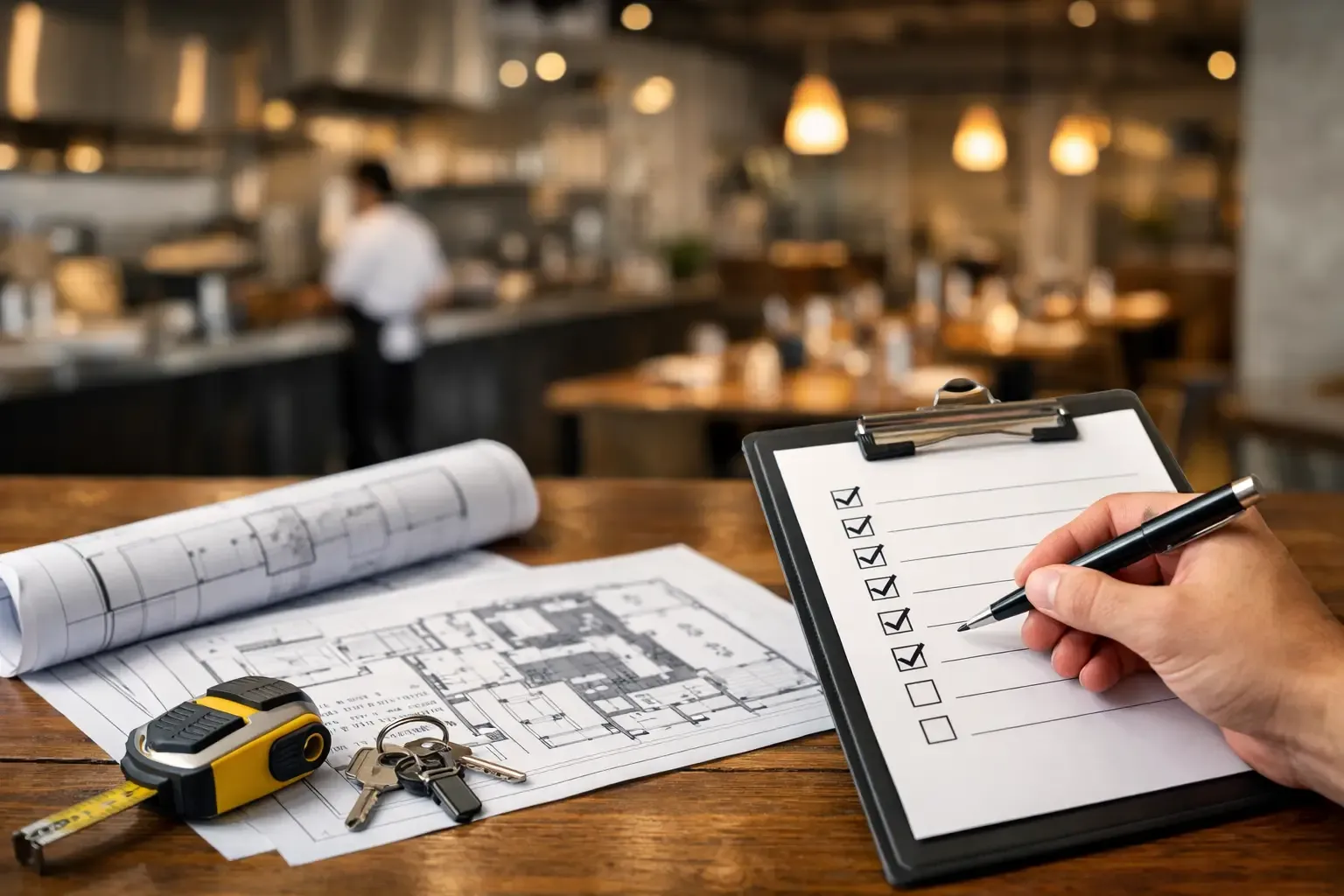
A restaurant rarely gets delayed because of one big mistake. It gets delayed because permits, approvals, and inspections were treated like paperwork instead of a critical path. If you are opening, renovating, or taking over a space, a solid restaurant permitting checklist is not administrative busywork. It is part of your opening strategy, your cash-flow plan, and your risk control.
Operators learn this fast. Rent starts. Contractors are waiting. Equipment is on order. Payroll is coming. Then one missing approval stalls the whole project. The cost is not just time. It is carrying costs, change orders, pushed training dates, and a softer launch than you planned.
What a restaurant permitting checklist should actually do
A useful checklist does more than name forms and licenses. It should tell you what approvals apply to your concept, when each one needs to happen, and where dependencies can create bottlenecks. A coffee kiosk, a full-service restaurant with liquor, and a nightclub with food service do not move through the same process.
That is where owners get burned. They download a generic checklist, assume it covers the job, and realize too late that their use group, occupancy load, hood system, grease interceptor, ADA scope, outdoor seating, signage, or alcohol application added another layer of review. Permitting is local. The sequence matters. And every decision you make in design can affect approvals later.
The core restaurant permitting checklist
Start with the property itself. Before you spend real money, confirm zoning and use approval. You need to know whether your intended restaurant use is allowed by right, allowed with conditions, or requires a special permit, variance, or hearing. If the site has prior food-service use, that can help, but it does not guarantee your concept fits the current code or occupancy requirements.
From there, most restaurant projects need a business license or local business tax registration, building permits for construction, and health department plan review and operating approval. If your layout includes cooking equipment that produces grease-laden vapors, you will likely need mechanical permits tied to the hood and suppression system. Electrical, plumbing, and fire permits are common as well, whether filed separately or under a general contractor.
If alcohol is part of the model, add liquor licensing early, not late. In many markets, alcohol approvals involve background checks, public notice requirements, floor-plan submissions, distance restrictions, or local board hearings. Those timelines can run much longer than owners expect.
Sign permits are another common miss. So are approvals for patio dining, valet operations, grease disposal, backflow prevention, music, live entertainment, and certificate of occupancy sign-off. If you are buying an existing restaurant and think you can skip half of this, slow down. Change of ownership, change of use, equipment modifications, and even branding updates can trigger new approvals.
Restaurant permitting checklist by project phase
Pre-lease or pre-purchase phase
This is where disciplined operators save the most money. Confirm zoning, parking requirements, occupancy classification, and any use restrictions before the lease is signed or the asset is acquired. Verify whether the site needs upgrades for ADA compliance, restroom count, fire protection, or grease management.
You should also confirm who is responsible for what. Landlords often say a site is "restaurant ready," but that can mean very different things. It might have utility capacity and an old hood, or it might still need major code work to support your concept. Do not assume prior use equals current compliance.
Design and plan review phase
Once the concept and footprint are set, your architect, engineer, kitchen designer, and permitting team need to work from the same set of assumptions. This phase usually includes architectural plans, MEP plans, kitchen equipment schedules, plumbing fixture counts, finish plans, and health department submissions.
Mistakes here are expensive. If your menu drives equipment changes after submittal, you can end up revising plans, resubmitting for review, and moving inspections. A smart permitting process ties menu, production volume, storage, dishwashing, waste flow, and guest capacity together before the drawings go out.
Construction phase
This is where your checklist becomes a tracking tool, not just a planning document. You need visibility on issued permits, inspection holds, correction notices, and revised submittals. Building, fire, health, and utility approvals do not always move at the same speed.
Operators who stay close to this phase open faster. The job is not to micromanage inspectors. It is to make sure every trade knows what is required, every document is current, and every failed inspection gets corrected immediately.
Pre-opening phase
Final approvals are where momentum either carries you to opening or disappears. This stage often includes final building inspection, fire final, health inspection, certificate of occupancy, alarm sign-off, suppression tag, and in some markets final approval for alcohol service.
Do not schedule hiring, training, deliveries, and marketing as if these approvals are guaranteed on a certain date. Build a realistic buffer. If a final inspection turns up missing documentation, mislabeled sinks, incorrect water temperatures, or incomplete life-safety items, you need room to fix it without breaking your launch plan.
The permits that cause the most delays
Health approvals are a major one, especially when the plan review was rushed or the kitchen was designed by people who do not understand operational flow. Hand sinks in the wrong place, insufficient refrigeration, poor warewashing setup, and bad waste handling can all slow approval.
Fire and hood-related permits also create problems. If your suppression system contractor, hood installer, and mechanical team are not coordinated, you can end up with failed inspections and expensive rework. The same goes for electrical load issues once cooking equipment is installed.
Liquor licensing is its own category of delay. The issue is not just state processing time. It is often incomplete applications, entity mismatches, lease language, neighborhood notice requirements, or floor plans that do not match what was submitted. Operators underestimate how much precision this takes.
Why generic checklists fail
A downloadable template can help you think, but it cannot replace project-specific judgment. Permitting depends on city, county, and state rules. It also depends on what you are building. A fast-casual conversion in a second-generation space has a different risk profile than a ground-up bar and grill with entertainment, patio seating, and a late-night license.
The right restaurant permitting checklist accounts for local process and operational reality. It should reflect your menu, your service style, your construction scope, and your opening timeline. If it does not, it is just paper.
This is one reason experienced operators bring permitting into the same conversation as budgeting, design, and launch planning. Step It Up Strategies approaches this the way operators have to approach it in the field: what has to happen, in what order, with what owner decisions, and what delay is most likely to cost the most.
How to manage the checklist without losing control of the project
Assign one accountable owner for permit tracking. That does not mean one person does every task. It means one person owns the status, the deadlines, the dependencies, and the follow-up. When five people assume someone else is handling a resubmittal or inspection booking, the project slips.
Keep one live permit log with submission dates, reviewer comments, issue dates, inspection results, and next actions. Your architect, contractor, ownership group, and operations lead should all be working from the same information. If there is a discrepancy between plan set versions or field conditions, address it immediately.
Most important, make permitting part of your financial model. Delays cost money every week. If your budget does not account for permit timing, contingency, and opening-date uncertainty, you are not budgeting for reality.
A better way to think about permitting
Permitting is not a hurdle you clear on the way to the real work. It is part of the real work. It affects design, schedule, labor planning, landlord negotiations, capital needs, and opening readiness. Treat it like an operations discipline from day one and you give yourself a far better shot at opening on time and opening clean.
The operators who win here are not the ones who hope approvals move fast. They are the ones who build a restaurant permitting checklist around the actual business, pressure-test it early, and manage it with the same discipline they expect on the floor. That is how you protect timeline, cash, and credibility before the first guest ever walks in.