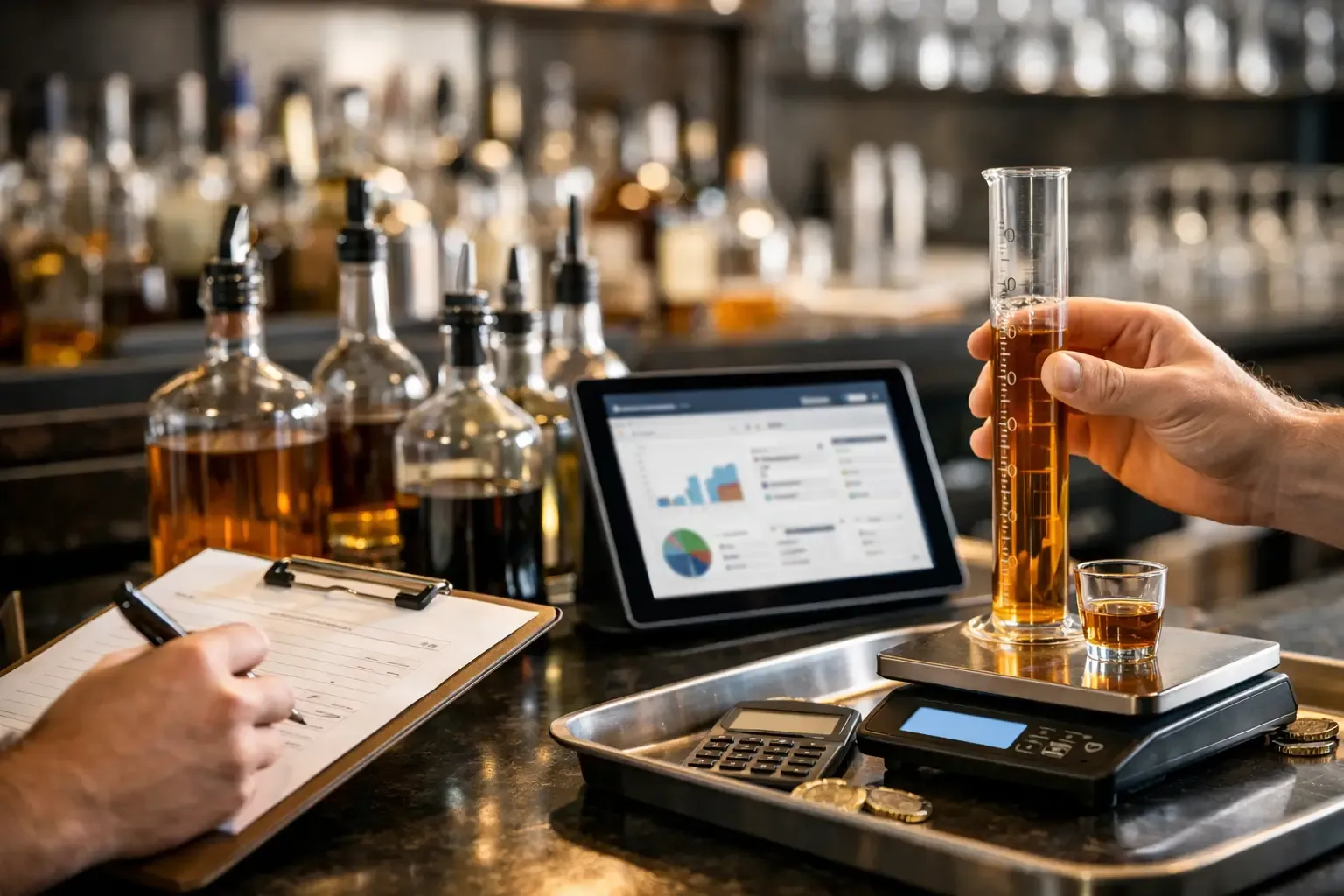
A bar can look busy, pour strong, and still lose thousands of dollars a month through inventory drift. The difference is rarely one dramatic issue. It is usually a mix of heavy pours, unrecorded comps, inaccurate receiving, inconsistent counting, and managers working from guesses. Learning how to set up bar inventory gives operators a repeatable way to see what is actually happening behind the bar before margin loss becomes a larger problem.
A useful inventory system is not an accounting exercise performed at month-end. It is an operating control. It tells you what was purchased, what should have been sold, what remains, and where the gap needs attention.
Start With a Bar Inventory System Built for Your Operation
There is no single inventory template that works for every bar. A cocktail-forward venue with 250 spirits, house infusions, fresh juice, and multiple service wells needs more detail than a neighborhood beer-and-shot bar. A hotel outlet may need separate counts for banquet storage, lobby service, pool bars, and minibar programs.
The goal is not to create the longest possible count sheet. The goal is to create a system your team can complete accurately, consistently, and on schedule.
Start by separating inventory into clear, fixed locations. That generally includes the main bar, service bar, liquor room, beer cooler, wine storage, event storage, and any manager-controlled backup area. Every product needs one primary home. If a case of tequila moves between three locations without documentation, it will create false variance no matter how carefully the team counts.
Your inventory sheet should also use the same product names, pack sizes, and units shown on vendor invoices and in your point-of-sale system. “Tito’s” is not specific enough if the operation purchases 1-liter bottles for the bar and 750-milliliter bottles for retail or events. Define the exact item once and keep it consistent.
Build a Product Master List Before You Count
A product master list is the foundation of accurate bar inventory. It is a complete record of every item you stock, how it is purchased, how it is counted, and what it costs.
For each item, record the product name, supplier, bottle or package size, purchase unit, current cost, pour size, selling price, and inventory location. Include nonalcoholic products that materially affect beverage cost, such as juices, syrups, energy drinks, bottled mixers, and premium garnishes. You do not need to count every napkin and straw as bar inventory, but you should not ignore high-cost ingredients that are used in cocktails.
For spirits, count in tenths of a bottle or use a scale system that converts bottle weight into volume. Tenths are fast and practical when trained managers count the same products every time. Scales can provide tighter accuracy for expensive bottles, but only if the setup is calibrated and the staff knows how to use it. A system that is slightly less precise but completed every week is more valuable than a highly technical system that gets abandoned after two weeks.
For beer, decide whether you count by individual bottle, can, six-pack, case, keg, or partial keg. For wine, count sealed bottles separately from open bottles when glass-pour sales are meaningful. Kegs require special attention because visual estimates are often unreliable. If draft beer is a significant revenue stream, a keg scale or line-level monitoring system may be worth the investment.
Set Par Levels That Protect Service and Cash Flow
Par levels are the target quantities you want on hand to support expected sales between deliveries. They prevent two expensive problems: running out of a core product during service and tying up too much cash in slow-moving stock.
Set pars based on actual sales velocity, delivery schedules, storage capacity, seasonality, and lead times. Do not set them based on what feels comfortable. If you sell two cases of a particular beer each week and receive deliveries twice a week, carrying eight cases may be unnecessary unless a holiday weekend or supplier disruption is approaching.
A strong starting point is to review four to eight weeks of sales and identify your fast movers, core items, and low-volume specialty products. Build a higher buffer for products that drive signature drinks, have inconsistent availability, or require a longer lead time. Keep tighter pars on slow-moving premium spirits, seasonal flavors, and products purchased for a single event.
Par levels should be reviewed regularly. A menu change, new happy hour, shift in guest mix, or expanded event calendar can make last quarter’s pars irrelevant. Inventory management is not static because your operation is not static.
Count on a Fixed Schedule With Clear Ownership
Most full-service bars should conduct a complete inventory at least weekly. High-volume nightclubs, resorts, and venues with multiple outlets may need daily spot counts on high-value spirits, champagne, beer, or high-variance categories. Monthly counts alone are too slow. By the time you identify a problem, the loss may be four weeks old and impossible to trace.
Choose a consistent count time, ideally after close and before any new product is received or transferred. The person counting should not be interrupted to close checks, settle staff, or take vendor calls. Count sheets should be completed in the same sequence each time, location by location.
Accountability matters here. One trained manager can count, while a second person verifies high-value items and signs off on the final numbers. If the same person orders product, receives product, makes adjustments, and counts inventory without review, you have created an internal-control weakness. Trust your team, but build controls that do not depend on trust alone.
During each count, document the following transactions separately:
- Deliveries received after the prior inventory count
- Transfers between bars, event spaces, or storage areas
- Breakage, spoilage, expired product, and keg loss
- Approved comps, promotions, staff education, and tastings
- Returns, credits, and products removed for vendor replacement
These entries keep operational activity from being mislabeled as unexplained variance. They also force managers to distinguish between an approved cost and a preventable loss.
Calculate Usage Before You Judge Beverage Cost
The core inventory equation is straightforward:
Beginning inventory + purchases - ending inventory = usage
Usage is what the operation consumed during the period, measured at cost. Compare that number against beverage sales to calculate your actual beverage cost percentage. For example, if your bar used $8,000 in product and generated $32,000 in beverage sales, your actual beverage cost is 25 percent.
That number is useful, but it is not enough on its own. Compare actual cost to theoretical cost. Theoretical cost is what your beverage cost should have been based on recorded sales, approved recipes, standardized pours, and current product costs.
If theoretical cost is 21 percent and actual cost is 25 percent, the four-point gap deserves attention. It may reflect overpouring, unauthorized drinks, missed ring-ins, incorrect recipes, inaccurate inventory, receiving errors, or price increases that have not been updated in the system. The answer is not automatically theft, and treating every variance as theft can damage a team. Start with process, data, and observation.
Make Recipes and POS Buttons Match the Bar
Inventory controls fail when the menu, POS, and actual bartending practice tell different stories. Every signature cocktail should have a written recipe with exact spirits, modifiers, garnish, glassware, and pour sizes. Every liquor modifier, top-shelf substitution, double, and add-on should have a usable POS button at the correct price.
Watch for the common gap between a 1.5-ounce recipe on paper and a bartender who free-pours closer to two ounces during a busy shift. Free-pouring can work in a disciplined program with training and regular testing. It also carries more variance risk than jigger-based service, particularly with new staff, high-volume service, or premium pours. The right choice depends on your concept, speed requirements, and management discipline.
Price changes matter as much as pour controls. If supplier costs rise and the team does not update recipe costs or selling prices, the business can appear operationally sound while margins quietly erode. Review key costs whenever invoices arrive, with closer attention on agave spirits, whiskey, wine, imported beer, and other categories that can move quickly.
Investigate Variance by Category, Not by Hunch
When actual usage exceeds theoretical usage, do not begin with a broad accusation. Break the variance down by category and product. A tequila issue may point to a specific cocktail, weekend shift, service well, or receiving practice. A beer variance may be tied to foamy pours, draft line issues, event transfers, or damaged cans that were never logged.
Review the products with the largest dollar variance first. Losing half a bottle of a low-cost well vodka is not the same financial issue as losing three bottles of a premium bourbon. Then compare patterns across periods. One bad week may be a counting error. A repeated issue is a management problem until proven otherwise.
The best corrective actions are specific. Retrain staff on jigger use, lock up backup inventory, revise a POS modifier, check receiving against invoices, repair a draft system, or adjust an unrealistic recipe. Avoid broad directives like “watch costs.” Your managers need a clear action, an owner, and a deadline.
Treat Inventory as a Weekly Management Meeting
Bar inventory should end with a short review, not a spreadsheet filed away after close. Look at actual cost, theoretical cost, key variances, sales mix, purchasing needs, and products approaching excess stock or expiration. Over time, this review becomes one of the clearest indicators of whether the bar program is being managed or merely operated.
A disciplined count will not eliminate every variance. Hospitality is physical, fast-moving work, and some loss is unavoidable. But when your counts are consistent, recipes are enforced, receiving is verified, and managers act on the data quickly, inventory stops being a monthly surprise. It becomes a practical tool for protecting cash, supporting service, and running a more profitable bar.