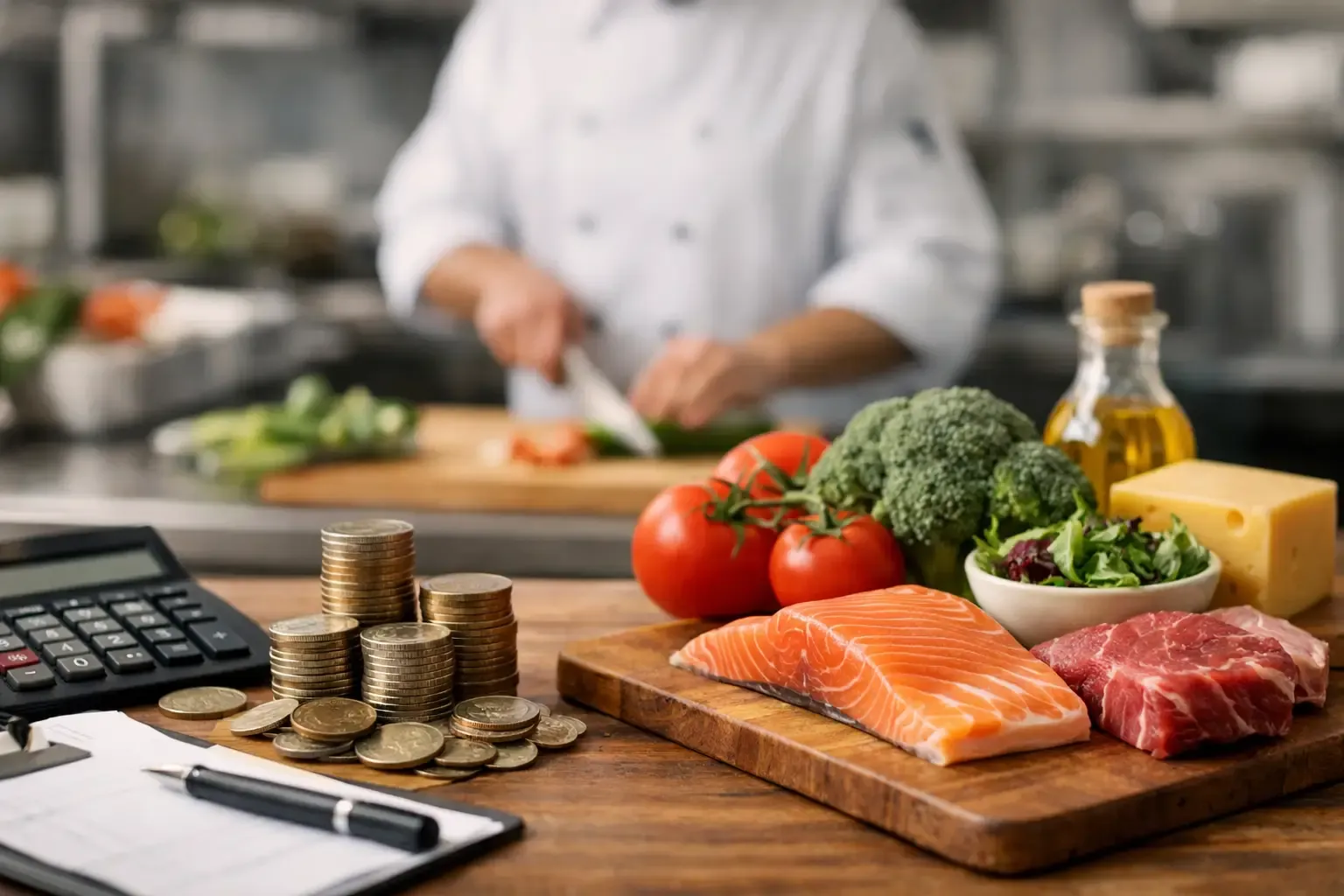
If your prime cost is drifting up while sales look flat, you do not have a food problem. You have a control problem. That is usually where operators get stuck when they ask how to reduce food cost. They look for one fix - cheaper vendors, smaller portions, fewer ingredients - when the real answer is tighter systems across purchasing, prep, pricing, and accountability.
Food cost does not move for one reason. It moves because a dozen small decisions are happening every day without enough discipline behind them. The operators who improve margins consistently are not guessing. They know what each plate should cost, what each case should yield, where waste is showing up, and who owns the result.
How to reduce food cost starts with the right number
A lot of teams talk about food cost as one broad percentage, but that number by itself can hide real issues. A 30 percent food cost may be fine for one concept and dangerous for another. It depends on your average check, menu mix, labor model, service style, and beverage contribution.
Start with three numbers: theoretical food cost, actual food cost, and variance. Theoretical tells you what food cost should be based on recipes and sales mix. Actual tells you what happened based on purchases and inventory movement. The gap between the two is where your margin is leaking.
If that variance is wide, do not jump straight to menu cuts. First look at whether recipes are current, inventory counts are accurate, and purchasing is being managed in real time. Many operators think they have a food cost issue when they really have a counting issue or a receiving issue.
Fix purchasing before you touch the menu
Most margin erosion starts before product ever hits the line. Ordering without par levels, buying from too many vendors, and accepting substitutions without cost review can quietly drag profitability down every week.
Par levels should reflect actual sales patterns, not habit. If your team is ordering based on fear of running out rather than forecasted demand, you will carry too much inventory, increase spoilage, and tie up cash. That is especially common in concepts with broad menus or seasonal fluctuations.
Vendor management matters just as much. Price increases happen, and not all of them are unreasonable. The problem is when operators are not tracking them. Review invoice pricing every week on core items, especially proteins, oils, dairy, and high-volume produce. One unnoticed increase on a top seller can wipe out the margin on hundreds of covers.
Receiving needs discipline too. Cases should be counted, weights checked when necessary, and substitutions approved intentionally. If the kitchen is accepting whatever arrives because service is coming and there is no time to push back, you are not controlling cost. You are absorbing it.
Tighten recipe costing to reduce food cost without guessing
Recipe costing is not glamorous, but it is one of the fastest ways to reduce food cost. If your recipes are outdated, incomplete, or based on old purchase prices, your menu decisions are being made on bad information.
Every item should have a current recipe card with exact quantities, usable yield, and plating standards. Not approximate. Not what the chef remembers. Exact. If one cook uses six ounces of salmon and another uses seven and a half, your food cost is not stable, no matter how well you negotiate with vendors.
Yield is where many operations lose accuracy. A case price means very little if trim loss, shrink, or prep waste is not built into the cost. Whole produce, butchered proteins, and house-made sauces all require yield testing if you want a real number. That takes time, but it gives you pricing confidence and exposes weak spots in prep.
This is also where menu engineering becomes useful. Some items are popular but underpriced. Others carry strong margins but are not being sold effectively. You do not need to gut the menu to fix that. Often, a small price adjustment, a better menu position, or a different side component is enough to improve contribution without changing the guest experience.
Portion control is a management system, not a training speech
When operators ask how to reduce food cost, portion control usually comes up early. For good reason. Over-portioning is one of the most common and most preventable margin problems in food and beverage operations.
The mistake is treating it like a one-time reminder. Telling the team to be careful is not a system. Scales, ladles, spoodles, slicer settings, standardized glassware, and plate diagrams are systems. They remove judgment from repetitive tasks and create consistency on busy shifts.
There is a trade-off here. If you get too aggressive, guests notice. If you make no changes, margins keep slipping. The right move is usually not to make portions feel smaller. It is to make them more accurate. That could mean trimming plate waste by reducing unnecessary sides, tightening protein cuts, or improving prep consistency so the plate looks full without giving away product.
Managers should spot-check line builds during service and review waste after shifts. If a station is consistently heavy-handed, address it immediately. Small overages multiplied by volume become very expensive very quickly.
Waste control has to reach prep, line, and service
Waste is rarely one dramatic issue. It is death by a hundred routine mistakes. Overproduction before a slow lunch. Poor labeling in walk-ins. Prep batches that exceed demand. Garnishes built for appearance but tossed at the end of the night. Misfires, remakes, and dead plates that no one logs.
To reduce food cost, track waste by category. Spoilage, overproduction, trim, quality rejection, and service errors should not all sit in one bucket. If you separate them, patterns show up fast. Maybe your brunch prep is too aggressive on Saturdays. Maybe one line cook is responsible for most remakes. Maybe a low-volume menu item is creating avoidable spoilage because the ingredient has no cross-utilization.
Cross-utilization is one of the best controls in menu development. If an ingredient only appears in one item and that item does not sell consistently, you are carrying risk. Broadening ingredient use across multiple dishes gives you more flexibility and reduces dead stock.
Inventory discipline is where operators prove they are serious
Weekly inventory is not optional if you want dependable food cost control. Monthly counts are too slow for most hospitality businesses. By the time you see the problem, you have already paid for four weeks of bad habits.
Counts need to be done the same way every time, by trained people, with consistent units and cutoffs. If one week includes product still on the truck and the next week does not, your numbers will lie to you. If open bottles, partial cases, and prepped items are estimated loosely, your variance reports will not mean much.
Good inventory discipline also improves behavior. When teams know product movement is being monitored every week, ordering gets tighter, receiving gets cleaner, and unexplained depletion gets harder to ignore.
Train the team on dollars, not just recipes
Back-of-house teams often hear about waste in abstract terms. Use less. Be careful. Watch portions. That language usually does not stick because it does not connect to the business.
Translate product use into dollars. Show a prep cook what one extra ounce of chicken means over a week. Show a sous chef what recurring trim loss means over a quarter. Show service managers how remakes hit margin and ticket times at the same time. When the team understands the financial effect of routine behavior, accountability gets more practical.
This is where operator-led coaching matters. The best managers do not lecture from an office. They connect the numbers to station execution, guest experience, and shift realities. That is how systems hold under pressure.
Use menu pricing carefully, but do use it
Some operators avoid price changes for too long because they are worried about guest reaction. That caution is understandable, especially in competitive markets. But if your costs have moved materially and your menu has not, you are funding that gap yourself.
Price changes do not have to be broad or dramatic. In many cases, selective adjustments on high-demand, high-value items are enough. The key is making those decisions from current recipe data and sales mix, not gut instinct.
It also helps to look beyond the listed price. Modifiers, add-ons, side substitutions, and combo structures can all affect margin. If guests are consistently trading into higher-cost components without an upcharge, that is a pricing problem hiding inside operations.
For operators who need a cleaner answer to how to reduce food cost, this is the truth: food cost comes down when leadership builds a system that catches loss early. Purchasing has to be controlled. Recipes have to be current. Portions have to be measured. Waste has to be tracked. Inventory has to be weekly. Pricing has to reflect reality.
None of that is theoretical. It is front-line discipline backed by financial clarity. When you build that structure, you do not just protect margin. You run a business that can handle growth, absorb volatility, and make decisions from facts instead of frustration.
The operators who win this fight are not the ones chasing cheaper ingredients. They are the ones who stop letting preventable losses hide in plain sight.