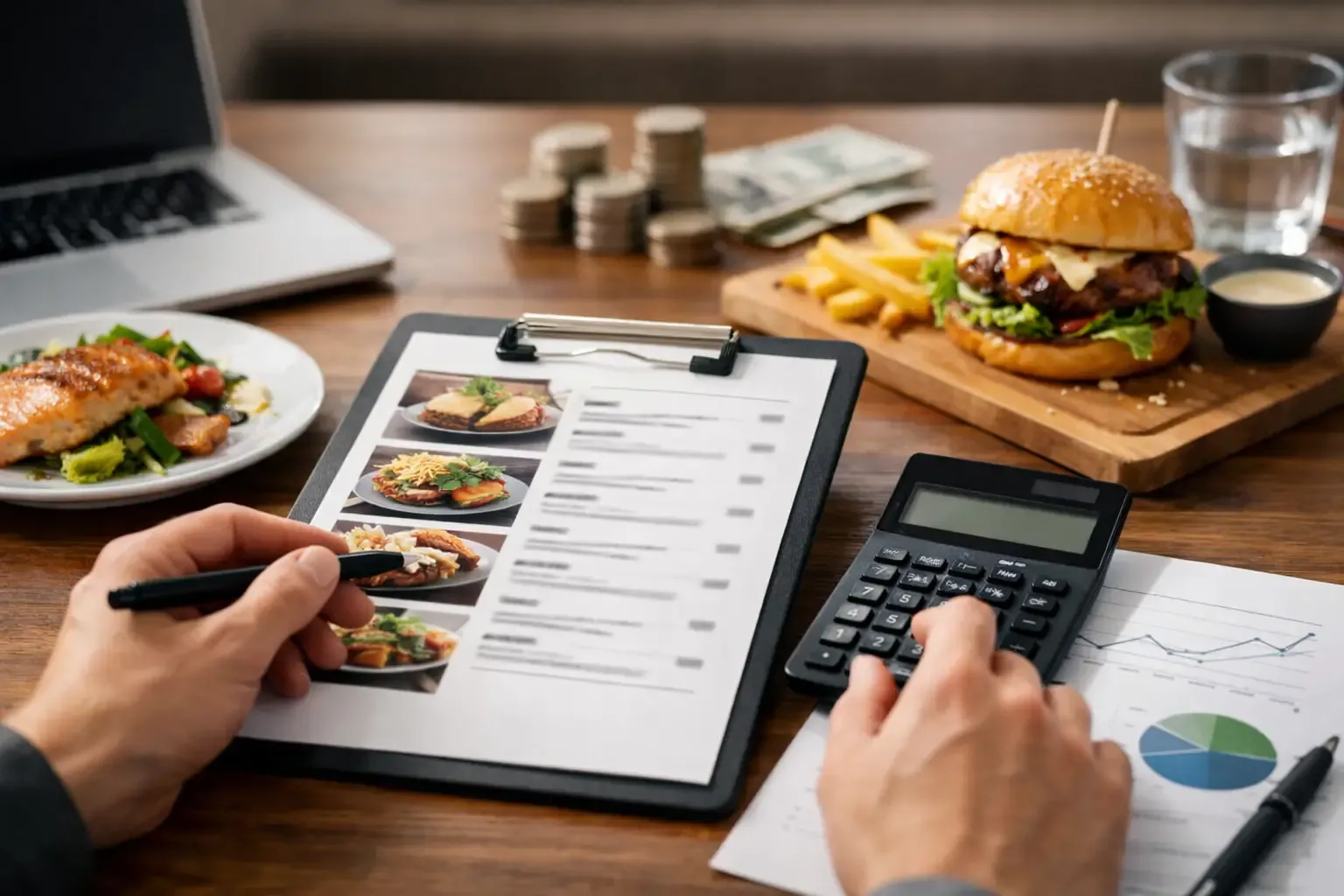
If your restaurant is busy but your bank account says otherwise, pricing is the problem. Learning how to price menu items is not about picking a food cost target and calling it done. It is about building prices that can carry your actual operation - rent, labor pressure, credit card fees, waste, promotions, and the guest expectation that value still feels fair.
Too many operators inherit pricing from a chef’s instinct, a competitor’s menu, or a spreadsheet that looked right six months ago. Then beef jumps, overtime creeps up, delivery mix changes, and the menu keeps selling products that are popular but underpriced. Volume does not fix weak pricing. It usually hides it until cash gets tight.
How to price menu items starts with real costs
The first mistake is using theoretical plate cost. You need actual recipe costing, and that means weighed yields, trim loss, oil absorption where relevant, garnish, sauces, disposables for off-premise sales, and any modifier that regularly hits the plate. If your fries come with a ramekin, lid, ketchup portion, and takeout tray half the time, those costs belong in the item.
That sounds basic, but this is where margins leak. A dish may show a 24 percent food cost on paper and run at 31 percent in service because the prep sheet is loose, portioning is inconsistent, or the protein spec changed and nobody updated the recipe card. Before you set prices, clean up the inputs.
Then separate controllable cost from fully loaded business reality. Recipe cost tells you what it takes to produce the item. It does not tell you whether the menu price supports your labor model, occupancy cost, barback hours, linen program, comps, and merchant fees. Operators who only price to food cost percentage often end up with menu items that look healthy in isolation but weak in the context of the whole P&L.
Use contribution margin, not just food cost percentage
Food cost percentage matters, but it is not enough to tell you what to charge. Contribution margin is what the item leaves behind after direct cost. That is the money helping cover labor and overhead and, ideally, generating profit.
Here is the practical difference. A pasta that costs $4 to make and sells for $16 runs a 25 percent food cost and leaves a $12 contribution margin. A steak that costs $14 and sells for $36 runs a 38.9 percent food cost but leaves a $22 contribution margin. If you price only by percentage, you may push the steak too high or undervalue the pasta’s role. If you price only by dollars, you may ignore a category that is becoming unstable due to market swings.
Strong pricing decisions use both. Percentage helps you control category health. Contribution margin helps you understand what each sale actually does for the business. In a high-volume concept, that distinction is not academic. It is the difference between a menu that drives traffic and a menu that funds the operation.
Build prices around your concept and guest check goal
How to price menu items correctly depends on what kind of business you are running. A fast-casual lunch concept, a neighborhood cocktail bar, and a resort steakhouse cannot use the same pricing logic.
Start with your target average check and your sales mix. If your concept needs a $28 average check to support prime costs and rent, but most guests order one entree and water, your entree pricing has to carry more weight than a place where appetizers, cocktails, and dessert are standard. The menu has to work as a system.
This is where many openings go sideways. Founders price individual items to feel competitive, but they never model the likely guest path. If the typical table orders two low-margin entrees and skips add-ons, the check average never gets where it needs to go. Price architecture matters just as much as single-item pricing.
You want logical entry points, profitable mid-tier choices, and premium options that raise the ceiling without scaring off the core guest. That does not mean manipulating people. It means designing a menu that gives guests clear choices while protecting the economics of the business.
Competitive pricing matters, but copying competitors is lazy
You should know the market. You should know what nearby operators charge for a burger, martini, salmon entree, and kids meal. But competitive pricing is a reference point, not a strategy.
A competitor may have lower occupancy cost, a different labor structure, stronger purchasing power, or a menu mix that allows them to underprice one category and make it up elsewhere. If you copy their numbers without understanding their model, you are borrowing risk.
The better question is this: where does your concept sit in the market, and does the guest experience support that position? If your room, service, ingredients, and brand story justify a premium, underpricing can hurt you as much as overpricing. Guests often use price as a quality signal. If your menu looks too cheap for the setting, it can create doubt instead of demand.
At the same time, there is a hard ceiling in every trade area. Cross it without a clear value case, and traffic drops. This is why pricing cannot happen in a vacuum. It has to reflect local demand, concept quality, and how guests actually compare options.
Account for labor pressure and operational complexity
Not every item with a strong recipe cost is a good item to push. Some dishes are labor heavy, slow the line, require highly skilled prep, or create waste through low-volume ingredients. If a plate ties up your sauté station on a Friday night and drags ticket times, that operational cost is real even if the food cost percentage looks fine.
The same applies at the bar. A signature cocktail with expensive ingredients may still be worth featuring if it has a high dollar margin and supports the brand. But if it requires six touches, hard-to-prep components, and a bartender you cannot reliably staff, it may be priced correctly on paper and wrong for the business.
That is why experienced operators price with labor reality in mind. Simpler items can sometimes deserve aggressive promotion because they are easy to execute and produce consistent margin at volume. More complex items may need a premium price or tighter availability. Profit is not just what the recipe says. It is what the operation can deliver repeatedly.
Psychological pricing is useful, but only when it fits the brand
There is no universal rule that every item should end in .95 or .99. In some concepts, that looks familiar and approachable. In others, it looks cheap. Whole-dollar pricing can work well in upscale casual, bars, and chef-driven formats because it feels cleaner and more confident.
What matters more is spacing between price points and how the menu reads. If every entree is clustered between $18 and $19, guests have no real pricing cues. If one item sits at $21, another at $28, and a premium feature at $39, the ladder is easier to understand. Guests do not read menus like accountants. They make fast comparisons.
Use that behavior intelligently. A strong mid-tier item often becomes the workhorse because it feels like the safest value. If that item also carries solid contribution margin, your pricing structure is doing its job.
Review menu pricing on a schedule, not during a panic
Most operators wait too long to reprice. They absorb vendor increases, shrink portions quietly, and hope volume holds. Then they make a big jump all at once and blame guest pushback. The problem was not the increase. It was the delay.
Set a review cadence. Monthly is smart for key commodities and category health. Quarterly is a minimum for full menu pricing analysis. Look at recipe cost changes, mix shifts, check average, category margins, and guest response. Repricing should be measured, not emotional.
Not every increase needs to hit the menu in the same way. Sometimes the right move is changing the portion, adjusting the side, narrowing modifiers, or moving an item out of the lineup entirely. Some products are not worth saving if they no longer fit the economics or the kitchen.
If you want a disciplined system, classify items by popularity and profitability. Your stars may be able to take a modest increase. Your puzzles may need better placement or a recipe adjustment. Your dogs may need to go. Menu pricing is easier when you treat it like ongoing portfolio management instead of a one-time math exercise.
The right price is the one your business can defend
There is no perfect formula that removes judgment. How to price menu items comes down to balancing math, market position, execution, and guest perception. If the number works on paper but the guest will not buy it, it is wrong. If guests love it but it does not support the business, it is also wrong.
The operators who get this right stay close to their numbers and closer to the floor. They know what each item costs, what each sale contributes, where labor gets squeezed, and how the guest is responding in real time. That is the standard.
If your pricing has not been rebuilt with actual operating conditions in mind, start there. A menu should not just look sellable. It should carry the business you are trying to run.