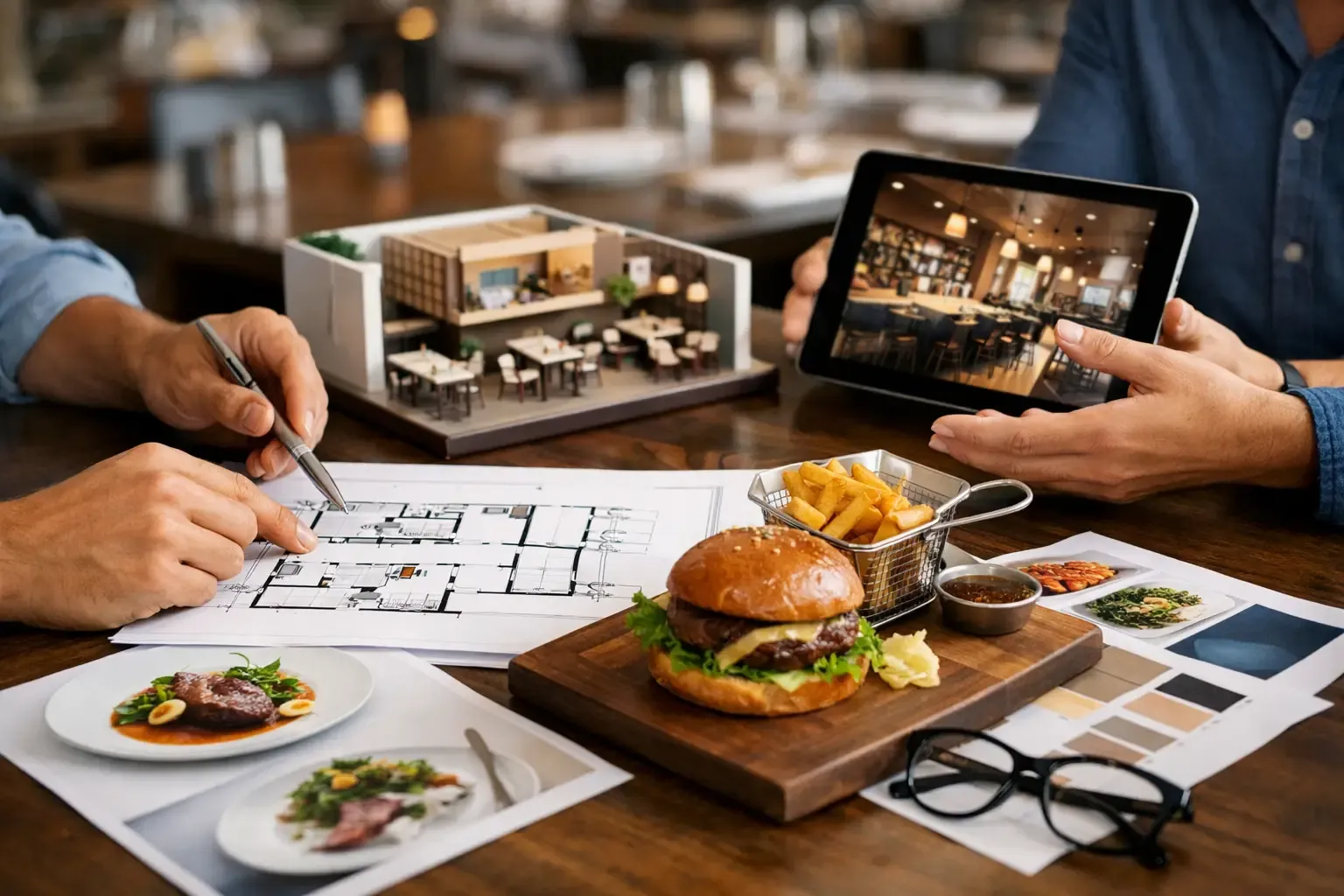
A lot of restaurant concepts die before the first guest ever walks in. Not because the food is bad, but because the math, positioning, and operating model were never aligned. If you want to know how to launch restaurant concept successfully, start here: treat the concept like a business system first and a creative exercise second.
That does not mean stripping out the personality. It means making sure the identity, menu, labor model, guest experience, and financial plan all support each other. A concept that looks great on paper but cannot survive rent, payroll, and service pressure is not a concept. It is a costly draft.
How to launch restaurant concept with a clear market position
Most founders begin with cuisine, design inspiration, or a personal story. Those matter, but they are not enough. The first real question is simpler: why will this concept win in this trade area, for this guest, at this price point?
You need a point of view that is specific enough to guide decisions. "Modern American with craft cocktails" is too broad. "Fast-casual Mediterranean bowls for office lunch traffic" is better. "High-energy Latin steakhouse built for dinner, private events, and premium beverage sales" is better still. The tighter the positioning, the easier it becomes to build the menu, labor plan, and marketing around it.
This is where many operators make an expensive mistake. They try to appeal to everyone, then end up with a menu that is too large, a brand that is forgettable, and a cost structure that belongs to three different businesses. Strong concepts say no early. They choose their guest, their dayparts, and their revenue priorities.
Trade-offs matter here. A concept designed for high check averages may need heavier upfront investment in design, service standards, and beverage inventory. A concept built for volume and speed may need a simpler menu, tighter kitchen flow, and lower average ticket with stronger throughput. Neither is inherently better. The right choice depends on market demand, capital, lease economics, and the operator's capability.
Build the concept around unit economics
If the financial model only shows up after the menu is written and the architect is engaged, you are already behind. Launch discipline means building the concept with target margins in mind from the beginning.
Start with the major drivers: projected sales by daypart, occupancy assumptions, average check, labor model, rent threshold, and prime cost targets. Then pressure-test them. If your concept requires a dining room that is full every Friday and Saturday just to break even, that is a warning sign. If your labor model depends on a management team wearing six hats forever, that is not efficiency. That is deferred failure.
Menu engineering belongs in this stage, not after opening. Signature items should support the story of the brand, but they also need to support food cost, prep complexity, ticket times, and consistency. The best opening menus are focused. They are designed to execute under pressure with a real crew, not an ideal crew.
Beverage deserves the same rigor. In many concepts, the bar is where margin is won or lost. Beverage programming should reflect guest demand, speed of service, inventory control, and training reality. A beautiful cocktail list that takes four minutes per drink can crush a busy bar if the station design and staffing plan do not support it.
Site selection and layout can make or break the launch
Founders often overvalue the address and undervalue the box. A great corner in the wrong footprint can create years of operating friction. Before you sign a lease, test the site against the concept's actual needs.
Can the kitchen support the menu without overbuilding? Is there enough storage for your purchasing and prep model? Does the bar placement help or hurt guest flow? Can staff move cleanly during peak periods? Is there room for pickup, delivery, private dining, or retail add-ons if those are part of the revenue plan?
A restaurant layout should be built around movement, visibility, and labor efficiency. A few extra steps at every station turn into payroll and service delays every day. Operators who have opened multiple units know this well: bad flow becomes permanent overhead.
Permitting, licensing, and code compliance also need to be addressed early, not when construction is underway. Health department requirements, hood systems, ADA compliance, alcohol licensing, grease trap needs, and occupancy limits all affect budget and timeline. Delays here are common, and they are rarely cheap.
How to launch restaurant concept with an operating model that holds up
A concept is not open when the buildout is done. It is open when the systems work. That includes hiring, training, opening procedures, prep systems, ordering routines, cash controls, service standards, and manager accountability.
This is where operator-led planning separates itself from consultant theater. The question is not whether a standard operating procedure manual exists. The question is whether the concept can execute a Friday night, close cleanly, count inventory accurately, and do it again tomorrow without burning out the team.
Build the operating model around real volume assumptions. Define labor by role and by daypart. Set opening and closing checklists that are tight enough to create consistency but not so bloated that the team stops using them. Establish inventory pars and ordering cadence before opening, not after the first stockout.
Training should reflect the guest promise of the brand. If your concept is positioned as elevated and knowledgeable, the staff needs more than menu memorization. They need steps of service, product fluency, upselling discipline, and recovery standards. If the concept is built on speed and convenience, training should focus on line flow, handoff accuracy, and throughput.
Technology choices should support the operating model, not complicate it. POS, kitchen display systems, scheduling tools, accounting workflows, reservation platforms, and payroll setup all need to work together. Founders often underestimate how much friction poor systems create in the first 90 days.
Pre-opening is where discipline shows
The weeks before opening are usually where budgets slip and standards get fuzzy. Everyone is busy, but not always productive. A controlled pre-opening process keeps the concept from entering the market half-built.
Your hiring plan should be complete early enough to allow actual training, not just orientation. Your menu should be tested under line conditions. Your recipes should be costed and standardized. Vendor relationships should be in place with backup options for key categories. Smallwares, uniforms, sanitation supplies, opening inventory, and printed materials should be tracked against a real checklist.
Soft openings are useful when they are treated as operational rehearsals. They are not there to generate buzz alone. They are there to expose bottlenecks, weak training, timing issues, and menu items that do not travel through the line the way you expected.
Marketing should match the maturity of the operation. A huge launch campaign is a mistake if the team is not ready to deliver. A better approach is controlled awareness tied to opening capacity. Fill the seats you can serve well, then build from execution.
The first 90 days will tell you what the concept really is
No launch plan survives first contact with guests unchanged. The operators who win are not the ones who guessed perfectly. They are the ones who adjust quickly without abandoning the core concept.
Track sales mix, labor percentage, food cost variance, voids, comps, guest feedback patterns, ticket times, and retention by position. Review them weekly. If one menu category is underperforming, fix it. If labor spikes every weekend because the station design is slowing production, address the root cause. If the concept is drawing a different guest than expected, decide whether to reposition or tighten your marketing.
This period demands discipline. Do not rewrite the whole concept because of one bad week. But do not ignore repeated signals because the original idea felt exciting. Strong operators know the difference between normal opening volatility and structural weakness.
For founders who want to know how to launch restaurant concept the right way, the answer is rarely more creativity. It is more alignment. Positioning, menu, labor, design, systems, and financial controls have to work as one model. That is what gives a concept a real chance to scale, or even just survive its first year.
If you are building a concept now, stay close to the numbers, stay honest about execution, and make decisions the operating team can actually live with. Guests feel the difference between a concept that was imagined well and one that was built to perform.