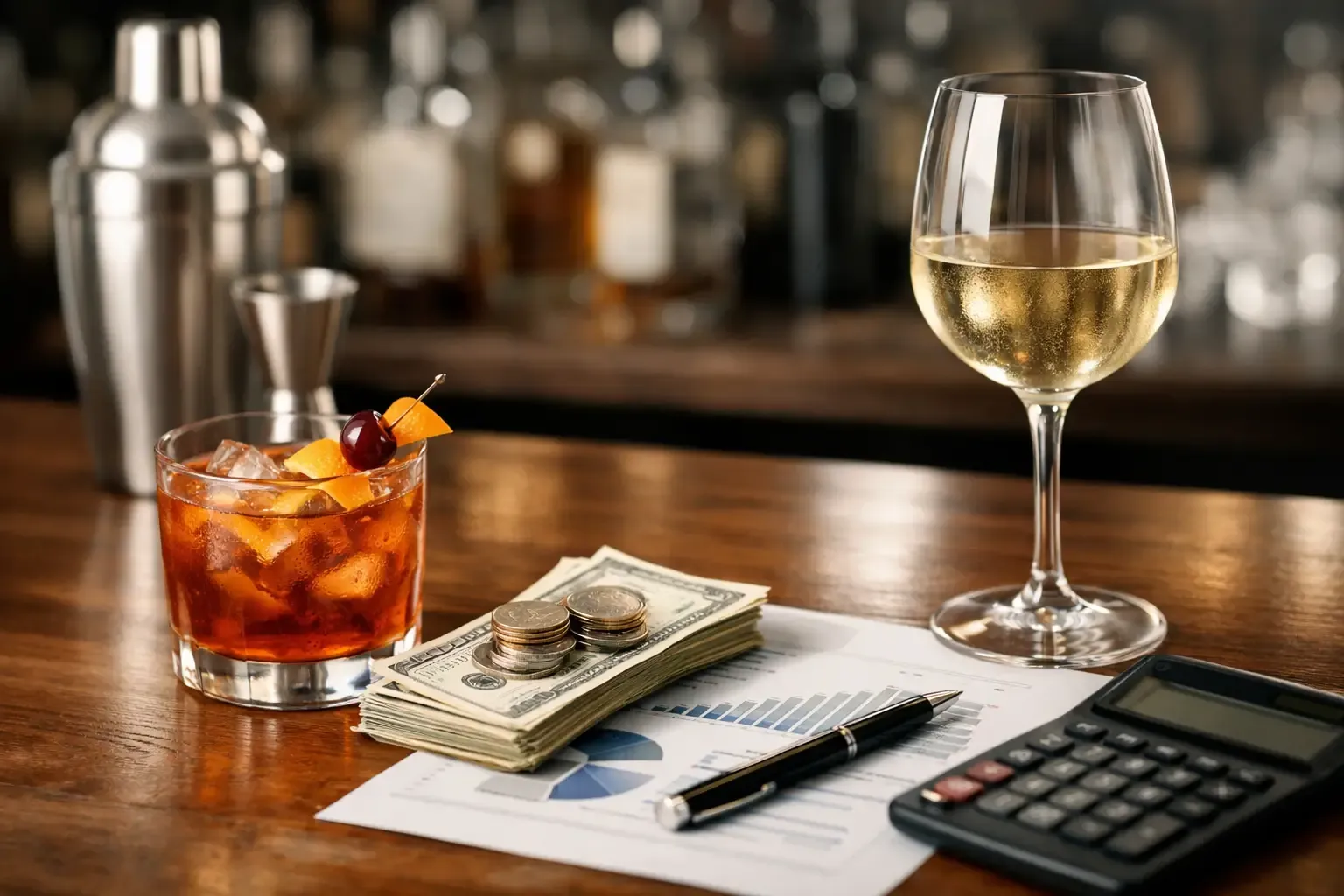
A beverage program usually looks profitable on paper right up until service starts. Then the glassware is wrong, the pours are inconsistent, prep eats labor, pricing misses the mark, and the menu reads better than it performs. If you want to know how to build beverage program strategy that actually holds up in a live operation, start with the business model, not the cocktail list.
Too many operators begin with what they want to serve instead of what the concept, staff, and guest can support. That is where margin leaks begin. A strong beverage program is not a collection of drinks. It is a revenue system built around positioning, throughput, cost control, and repeatable execution.
Start with the concept and revenue role
Before you select a single spirit, decide what the beverage program is supposed to do for the business. In a chef-driven restaurant, beverage may need to lift check average and complement the food without slowing the line or distracting from the dining experience. In a nightclub, speed and visual impact may matter more than depth. In a hotel lounge, the bar may carry the room between meal periods and need broader appeal across dayparts.
This sounds basic, but it determines almost everything that follows. Your mix of cocktails, beer, wine, zero-proof offerings, and premium pours should reflect the concept's revenue targets and service style. A high-volume venue with limited bar space cannot be programmed like a reservation-only cocktail room. A neighborhood restaurant should not carry a wine list designed for a luxury steakhouse unless the guest profile and pricing power justify it.
The right question is not, "What drinks do we like?" It is, "What beverage mix best supports this business model?" That answer gives you direction on assortment, labor, inventory depth, and pricing architecture.
How to build beverage program goals before building the menu
Operators who skip this step usually end up revising the program under pressure. Set targets early. Define your beverage sales mix, target pour cost by category, average check lift, and expected item velocity. If you are opening a new concept, these will be modeled assumptions at first. If you are revising an existing operation, they should come from actual sales and cost history.
You also need operational goals. Decide what ticket times are acceptable, how many drinks your bartenders should be able to execute during peak periods, and how much prep your team can realistically absorb without bloating labor. A beverage menu can be creative and still be operationally disciplined. In fact, it has to be.
There is always a trade-off. More customization can improve guest perception, but it often creates slower service, more waste, and training issues. A broader selection can increase appeal, but it may also tie up cash in inventory that does not move. Build goals that reflect the reality of your staffing, layout, and volume, not a version of the business you hope to have someday.
Build the menu around margin and movement
Once your targets are clear, build categories that make financial and operational sense. Most programs need a balanced mix of high-margin staples and a smaller number of signature items that define the brand. The staples pay the bills. The signatures create memory and differentiation.
That means you do not need twenty house cocktails to look serious. In many cases, six to ten strong cocktails will outperform a larger list because the team can execute them consistently, guests can process the menu faster, and inventory stays tighter. The same logic applies to beer and wine. Too much breadth without enough movement creates dead stock and avoidable complexity.
Menu engineering matters here. Price should reflect more than ingredient cost. It should account for prep time, glassware, garnish labor, waste risk, and the speed impact at the bar. A drink with an attractive theoretical margin may still be a bad business decision if it slows down service during your busiest hour.
This is where experienced operators separate theory from practice. The best beverage menus are designed for movement. They create clear anchors at different price points, steer guests toward profitable choices, and keep the bar team inside a manageable production range.
Design for your bar's physical reality
One of the fastest ways to sabotage a beverage program is to design it without considering the bar layout. If the station setup, refrigeration, draft system, ice access, and storage footprint cannot support the menu, execution breaks immediately.
Before finalizing the program, map each drink to the actual station. Where is the bottle stored? Where is the garnish kept? How many touches does it take to build the drink? Does it require a blender, a smoke element, or specialty ice that will create backups? Can two bartenders work the station without colliding during peak service?
These questions are not secondary. They are part of learning how to build beverage program systems that perform under pressure. A drink that takes seven motions in a styled photo may take thirty in a live rush. That difference shows up in labor, ticket times, and guest satisfaction.
If the concept depends on high volume, reduce unnecessary friction aggressively. Keep the menu visually polished, but build for repetition. If the concept is more experiential and lower volume, you can justify more complexity, but only if the check average and staffing model support it.
Standardize recipes like an operator, not an artist
Every item should have a written recipe with exact specs, glassware, garnish, method, and yield. That is standard practice, but the stronger move is to build recipes with purchasing, training, and inventory in mind from day one.
Use ingredients across multiple drinks whenever possible. Cross-utilization reduces waste, lowers inventory exposure, and simplifies prep. It also gives you more flexibility when vendor issues or price swings hit. If one cocktail requires a one-off liqueur, one special syrup, and one garnish used nowhere else, it needs to earn its place.
Batching can also improve consistency and speed, but it depends on the concept. Batching works well for high-volume service and can protect quality if procedures are tight. It can also create shelf-life issues and accountability gaps if the team is undisciplined. The right answer depends on volume, storage, and management controls.
Price with intent, then test in the real world
Pricing is where many beverage programs either underperform quietly or lose guests unnecessarily. You need a pricing model that reflects target cost, local market tolerance, competitor positioning, and the value perception of the experience.
There is no universal ideal pour cost. Cocktail targets, beer targets, and wine targets often differ by concept and market. What matters is contribution margin, velocity, and whether pricing aligns with your brand position. A luxury property can support pricing that a neighborhood bar cannot. A resort with captive demand plays by different rules than a street-side concept in a competitive district.
After launch, watch actual performance. Which items sell, which items get talked about, which items are too cheap for perceived value, and which items stall? Your first menu is a starting point, not a permanent decision. Operators who review beverage data weekly adjust faster and protect margin sooner.
Train for consistency and control
A beverage program is only as strong as its execution on a Saturday night. Training has to go beyond recipe memorization. Your team should understand the product, the service standards, the pacing expectations, and the financial consequences of inconsistent pours and comp abuse.
This is also where controls matter. Set clear standards for jigger use, cash handling, voids, comps, waste logging, and inventory counts. Build opening and closing procedures that protect product and make restocking predictable. If your bar management process is loose, your margins will be too.
Strong programs create accountability without slowing the team down. Bartenders should know what success looks like, managers should know what to inspect, and ownership should have visibility into category performance, variance, and labor impact. Step It Up Strategies approaches beverage development this way because style without control does not scale.
Keep the program alive
If you are asking how to build beverage program success over time, the answer is not to keep adding drinks. It is to manage the program like a living part of the business. Seasonality matters, but not every update needs a full rewrite. Sometimes a small refresh, a smarter feature strategy, or a pricing correction does more than a major overhaul.
Review sales mix, inventory turns, waste, guest feedback, and prep burden regularly. Pay attention to what the team is pushing, not just what is printed. If one menu section is underperforming, determine whether the issue is product, placement, training, or price. It depends, and guessing usually gets expensive.
A beverage program should earn its complexity. If an item is hard to prep, hard to sell, and easy to execute poorly, it is not adding sophistication. It is adding drag.
Build the kind of program your team can run cleanly, your guests can understand quickly, and your P&L can support month after month. That is the version worth keeping.