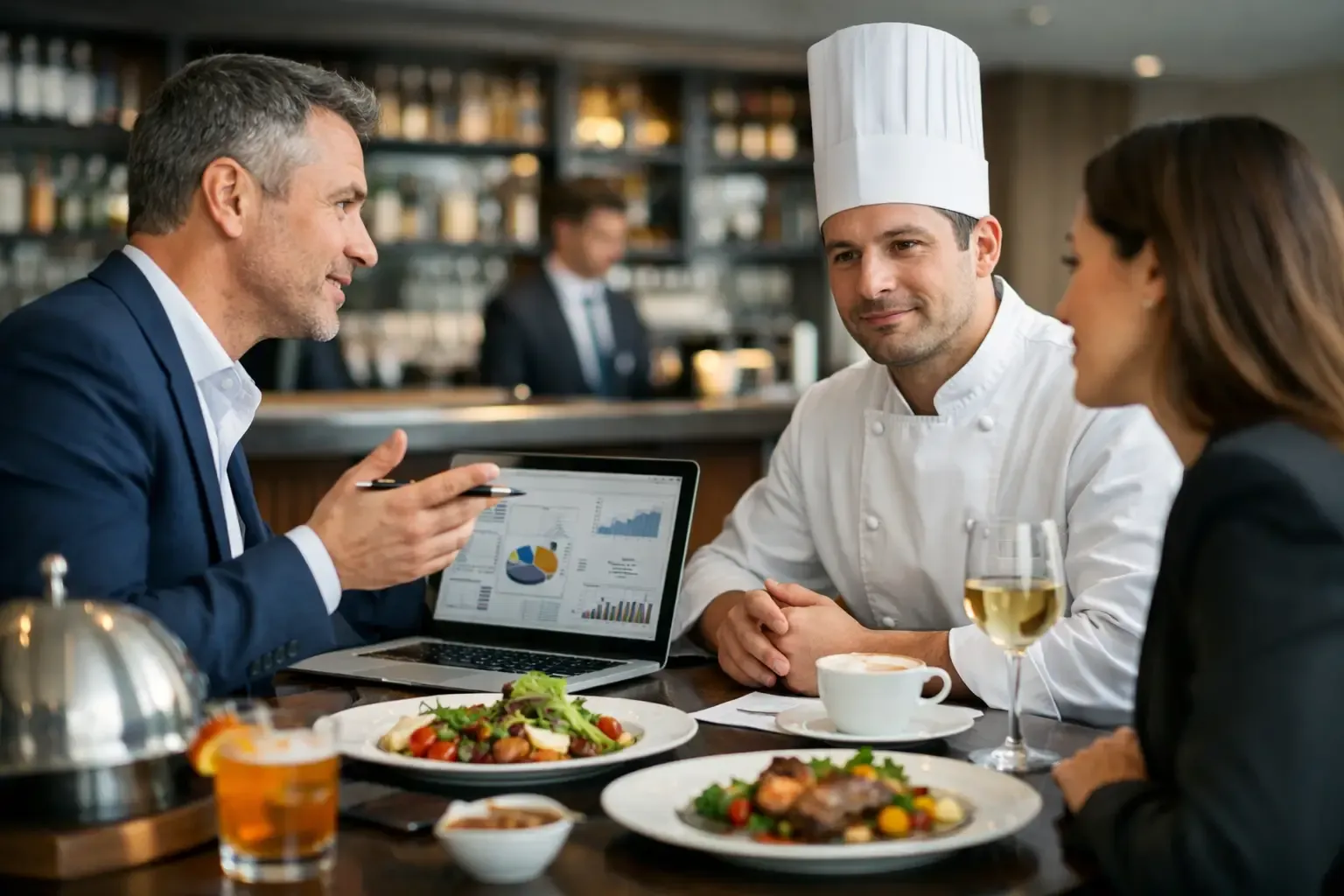
A hotel can fill rooms and still leave money on the table every night in its restaurants, bars, banquets, pool service, and in-room dining. That is where hotel food and beverage consulting earns its keep. Not by handing over a glossy deck, but by fixing the operating model, tightening the numbers, and building outlets guests actually want to use.
Hotels have a harder F&B job than standalone restaurants. They are expected to serve business travelers at breakfast, leisure guests at the pool, wedding parties at banquets, loyalty members in the lounge, and locals at the bar - often with one kitchen, uneven demand patterns, and a labor model that gets stretched thin fast. When performance slips, the problem usually is not one bad menu item or one weak manager. It is the system.
What hotel food and beverage consulting actually covers
Good hotel food and beverage consulting looks at the full operation, not just the menu. That includes concept positioning, revenue mix, labor deployment, kitchen and bar workflow, service standards, purchasing, beverage strategy, banquet profitability, and the financial controls behind all of it. In many hotels, one of the biggest issues is that these pieces were built separately and now do not work together.
A lobby bar may be designed for aesthetics but not volume. A breakfast program may satisfy brand standards but lose money every day. Banquets may drive top-line sales while hidden labor and overtime erase the margin. Room service may stay open because it feels expected, even though guest usage no longer justifies the cost. None of those issues gets solved in isolation.
That is why experienced operators approach the assignment by asking practical questions. What dayparts are producing real contribution margin? Which outlets support room revenue and which ones should stand on their own? Where is labor scheduled by habit instead of demand? Which menu categories are carrying dead weight? What service promise is the property making, and can the team execute it consistently?
Why hotels struggle with food and beverage profit
Hotel leaders often inherit complexity that was built over years. A property may have legacy menus, outdated POS reporting, brand requirements, union rules, space limitations, and ownership pressure to improve results quickly. Add staffing instability and inconsistent forecasting, and the operation starts making reactive decisions instead of disciplined ones.
The most common performance drag is misalignment between concept and guest mix. A hotel restaurant can look sharp on paper and still miss the market. If the outlet is priced for destination dining but the real audience is hotel guests looking for convenience and speed, check averages disappoint. If the menu tries to satisfy every possible guest, execution slows, waste increases, and nothing stands out.
Labor is usually the second issue. Hotels often spread labor across too many service promises. Extended breakfast hours, low-volume lunch, full-service room service, banquet prep, bar coverage, and late-night demand can create a schedule that looks comprehensive but bleeds productivity. Cutting labor blindly is not the answer. Rebuilding service models around actual demand is.
Then there is purchasing and product mix. Beverage programs especially get underused in hotels. A bar that should be a profit engine becomes a missed opportunity when the back bar is oversized, wine lists are not engineered, and cocktail execution depends on one or two strong bartenders. The same goes for banquets, where weak package design and poor production planning can turn big events into operational stress with average returns.
Where the right consultant creates value
The best consultants do not start with theory. They start with observation, reporting, and unit-level economics. They look at sales by outlet and daypart, contribution by category, labor by volume band, prep and pickup flow, guest behavior, and the operational friction points managers are dealing with every shift.
That process usually reveals fast wins and deeper structural work. Fast wins might include menu engineering, banquet package pricing, SKU reduction, tighter ordering controls, revised scheduling practices, or better beverage merchandising. Structural work is heavier. It may mean repositioning an outlet, redesigning a kitchen pass, changing service style, rebuilding manager routines, or deciding that a low-value service should be scaled back or replaced.
This is where operator-led consulting matters. People who have run busy properties know the difference between a good idea and an executable one. They know that a menu is only profitable if the line can produce it during a rush. They know that a bar program only works if ordering, storage, training, and pours are controlled. They know that a banquet kitchen cannot function on wishful staffing.
Hotel food and beverage consulting for new builds and turnarounds
The consulting need looks different depending on the stage of the property.
In a new build or repositioning project, hotel food and beverage consulting should begin before the first menu tasting. The concept, layout, storage, equipment package, and staffing model all affect long-term profitability. Too many hotels spend heavily on design and then discover the bar has no service station capacity, the kitchen lacks production flow, or the outlet mix does not match the market. Those are expensive mistakes because they get baked into opening.
In an existing hotel, the work is often turnaround-focused. Sales may be flat, guest capture may be weak, labor may be over target, or leadership may not trust the reporting. Here the job is to stabilize the operation quickly while building a better model behind it. That can include redefining outlet roles, simplifying menus, tightening inventory controls, improving banquet costing, and setting routines that managers can actually maintain.
The trade-off is straightforward. New-build consulting gives more control and better long-term design. Turnaround consulting deals with real constraints and usually requires faster decisions. Both matter, but they are not the same assignment.
What owners and operators should expect from the process
A serious consulting engagement should produce more than recommendations. It should create a plan that the property can implement, measure, and sustain.
That means clear financial baselines. It means outlet-specific analysis rather than broad F&B averages. It means labor standards tied to volume, menu decisions tied to margin and production reality, and service standards tied to guest expectations instead of personal preference. It also means accountability. If a consultant cannot explain how an idea affects flow-through, labor hours, check average, or guest capture, the recommendation is incomplete.
Operators should also expect some hard conversations. Not every outlet deserves to stay open in its current form. Not every menu needs more items. Not every hotel needs a large in-room dining operation. And not every guest-facing amenity is worth the operating burden it creates. Good consulting respects brand and guest experience, but it does not protect bad economics.
Signs your hotel needs food and beverage consulting
Sometimes the warning signs are obvious. Food cost is high, labor is unstable, and the restaurant is underperforming. More often, the issues are quieter. Banquet revenue looks strong but margins disappoint. The bar is busy yet inventory variance stays high. Breakfast gets traffic but contributes less than expected. Managers spend their time solving shift emergencies instead of running the business.
If ownership cannot get a clean view of outlet profitability, that is a problem. If menu changes happen without costing discipline, that is a problem. If staffing decisions are made by habit, if service standards depend on who is on duty, or if banquet pricing has not been reviewed against current labor and product costs, those are all reasons to bring in outside expertise.
The strongest consulting relationships work because they bring cross-functional discipline. Operations, finance, menu strategy, training, layout, and compliance all affect hotel F&B performance. Treating them separately is how hotels stay busy without getting more profitable.
That is also why firms like Step It Up Strategies are built around operator experience rather than advisory distance. The value is not just knowing what should happen. It is knowing how to make it happen in a live business with staffing pressure, ownership expectations, and real guest demand.
Hotel food and beverage performance rarely turns on one dramatic fix. It improves when the concept fits the market, the numbers are trusted, the labor model matches demand, and the team can execute the promise every shift. That is the work - and when it is done well, F&B stops being a complication inside the hotel and starts acting like the revenue engine it should have been all along.