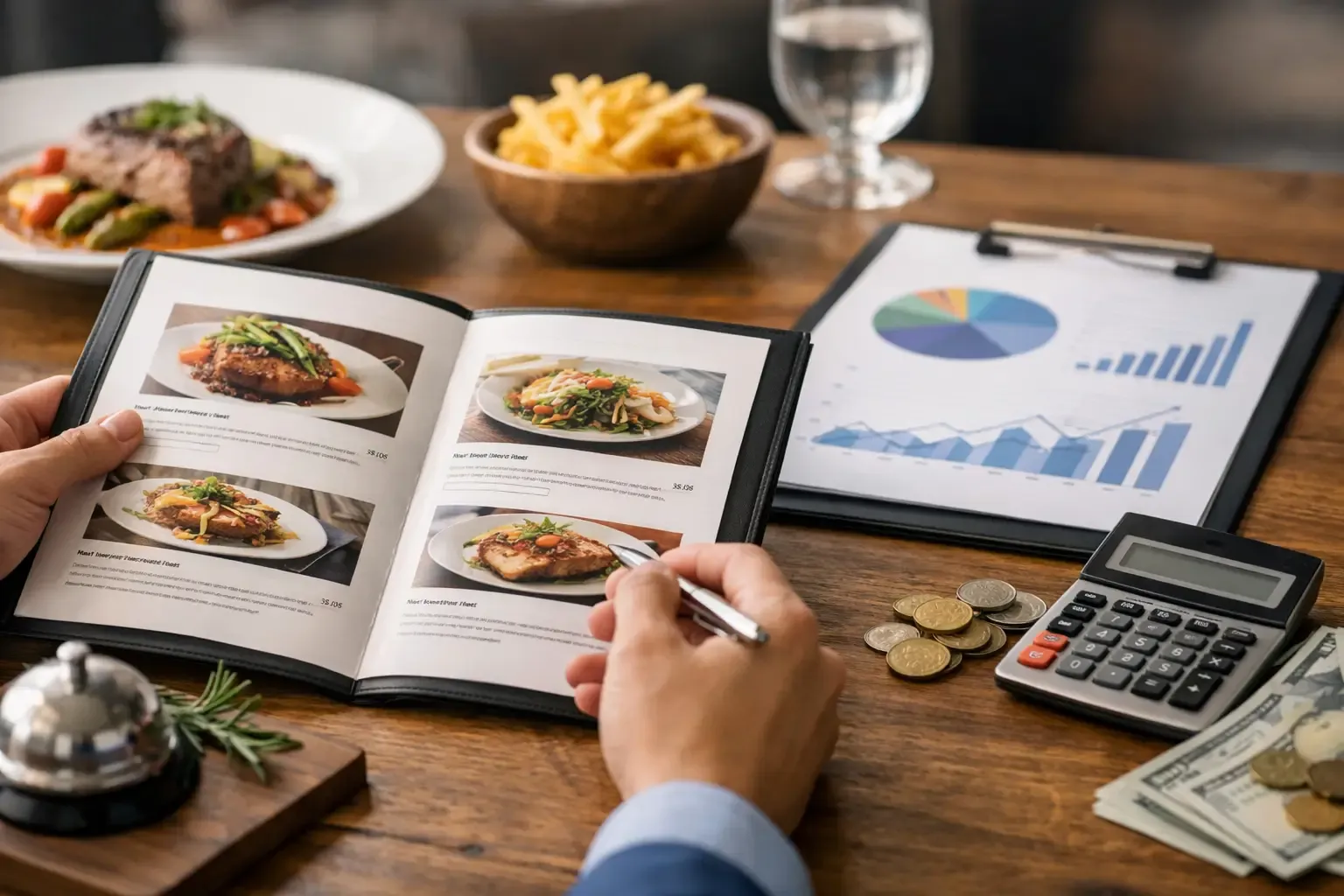
A menu can look busy, sell well, and still leave the operator short on cash. That is the gap a guide to menu engineering basics is meant to close. Menu engineering is not about making guests order what you want. It is about making every item earn its place through a disciplined review of margin, demand, execution, and guest value.
For independent restaurants, bars, hotels, and entertainment venues, the menu is one of the most practical financial controls in the building. It influences food cost, check average, speed of service, purchasing complexity, labor pressure, and the guest’s perception of value. Treating it as a design project alone is how profitable opportunities get buried and operational problems stay on the page.
What Menu Engineering Actually Measures
At its core, menu engineering compares two things: how often an item sells and how much contribution margin it produces. Contribution margin is the selling price minus the direct cost of the food or beverage. It is the dollars left to help cover labor, occupancy, overhead, and profit.
This distinction matters because food cost percentage can mislead operators. A $14 appetizer with a 25% food cost produces $10.50 in contribution margin. A $32 entrée with a 35% food cost produces $20.80. The entrée has a higher food cost percentage, but it may contribute nearly twice as many dollars toward the business.
That does not mean every item should carry the highest possible price or margin. Guests have expectations, competitors set reference points, and some menu items establish credibility for the concept. The job is to understand the trade-offs instead of relying on instinct.
Start With Clean, Current Numbers
Menu engineering fails when the inputs are unreliable. Before categorizing a single dish, standardize recipes and cost every ingredient at current delivered prices. Include oils, garnishes, sauces, disposables when applicable, and the portion sizes actually leaving the kitchen.
Then pull enough sales history to be useful. A four-week period can work for a stable concept, but a seasonal property, resort, or event-driven venue may need to compare the same period across multiple years. Remove obvious anomalies, such as a one-night buyout that distorted volume, but do not edit the data until it tells a more comfortable story.
Use the number of units sold, not revenue alone. A high-priced steak can lead sales dollars while selling too infrequently to justify prep, inventory, and menu space. Conversely, a low-priced side may sell constantly but create little meaningful contribution.
The Four Menu Engineering Categories
Once each item has a contribution margin and sales count, compare its performance against the menu average. Traditional menu engineering places items into four categories.
Stars are high-margin, high-popularity items. Protect them. Keep their quality consistent, ensure they are available, and make sure the recipe can be executed at volume. A star that regularly 86s on a Saturday night is not a star in practice.
Plowhorses are popular but lower-margin items. These are often guest favorites, signature comfort dishes, or value anchors. Raising the price may be appropriate, but it depends on the competitive market and the item’s role. Often the better move is controlled portion adjustment, a recipe revision, a complementary add-on, or a small price increase paired with stronger presentation.
Puzzles have strong margins but weak sales. The problem may be the name, placement, description, price point, server confidence, photography, or guest understanding. Do not cut a puzzle before testing why it is underperforming. A high-margin cocktail with a vague name may need a clearer flavor cue and a bartender recommendation, not a new recipe.
Dogs are low-margin and low-popularity. Many deserve to leave the menu, but not automatically. An item may be strategically useful for dietary inclusion, a children’s offering, a banquet requirement, or a limited but loyal audience. If it stays, give it a clear operating reason. “We have always had it” is not one.
A Practical Guide to Menu Engineering Basics
The classification chart is useful, but it is only the beginning. Operators need to turn the analysis into decisions that improve results without creating service failures or guest backlash.
First, review the menu by category. Guests do not compare a burger to a seafood entrée in the same way they compare two burgers. Calculate popularity and margin benchmarks within appetizers, salads, entrées, desserts, cocktails, beer, wine by the glass, and other logical groups. A beverage program should receive the same discipline as food, particularly where beverage sales carry a meaningful share of contribution.
Next, look beyond the item itself. Ask what it requires from the operation. Does it introduce a unique SKU that moves slowly? Does it need a separate prep process during peak service? Does it consume a critical piece of equipment? A dish with acceptable paper margin can become expensive when it adds waste, slows the line, or requires a skilled cook to execute every plate.
Then build an action plan. Avoid changing the entire menu after one report. Prioritize the items with the greatest financial impact and make changes in controlled rounds. For each decision, assign an owner, a deadline, and a measure of success.
Design Guides Decisions, But It Cannot Fix Bad Economics
Guests read menus in patterns, and visual hierarchy can influence attention. Use that fact responsibly. Give profitable, compelling items clear names, concise descriptions, and intentional placement. Place too many boxes, callouts, icons, or premium design treatments on the page, and nothing stands out.
Descriptions should answer the guest’s real question: what will I get, and why is it worth the price? “Wood-grilled chicken” is not as useful as “Wood-grilled chicken, roasted garlic jus, charred broccolini, and parmesan polenta.” The second version creates value, but only if the plate consistently delivers it.
Price formatting also deserves consideration. Removing dollar signs or excessive trailing zeros can reduce visual clutter in some concepts. In others, especially fast casual or highly price-sensitive environments, direct pricing may build more trust. There is no universal layout rule that overrides your brand position and guest behavior.
Server and bartender language matter as much as the printed menu. If the team cannot confidently explain a high-margin item, recommend a pairing, or describe its value, the engineering work stops at the table. Pre-shift training should cover priority items, modifications, allergy procedures, and honest selling points. Guests should feel guided, not pushed.
Pricing Requires More Than a Food Cost Target
A blanket target such as “keep food cost at 30%” is a starting point, not a pricing strategy. Prime cost, local competition, guest income, service level, portion expectations, and occupancy costs all affect what an item needs to contribute.
Use a pricing review to identify where an item is out of line. If a dish is materially underpriced, correct it. Small, regular adjustments are usually easier for guests to absorb than a large increase after eighteen months of inaction. But do not assume price is the only answer. A $2 increase on a weak item will not solve a recipe with excessive waste or a dish that guests do not value.
For beverage, watch pour cost and product mix together. A cocktail may have a strong margin but tie up the bar with a six-step build during a concert rush. A simple highball may generate slightly less margin per drink but more contribution per labor minute. The right choice depends on the venue’s volume, staffing model, and guest occasion.
Review the Menu on an Operating Rhythm
Menu engineering is not a once-a-year exercise completed before printing. Review core item performance monthly, with a deeper cost and mix analysis each quarter. Re-cost immediately when key commodities move, vendors change, portions drift, or a recipe changes.
Watch what happens after every menu adjustment. Compare sales mix, contribution margin, check average, waste, ticket times, guest comments, and employee feedback. If a price increase causes volume to fall, the decision may still be correct if total contribution improves. If sales hold but the kitchen becomes slower, the operational cost may outweigh the gain.
The strongest menus are built with financial discipline and tested under real service conditions. Start with accurate costs, identify what guests choose and what actually contributes, then make a few deliberate changes. A menu should not merely describe the business. It should help run it.