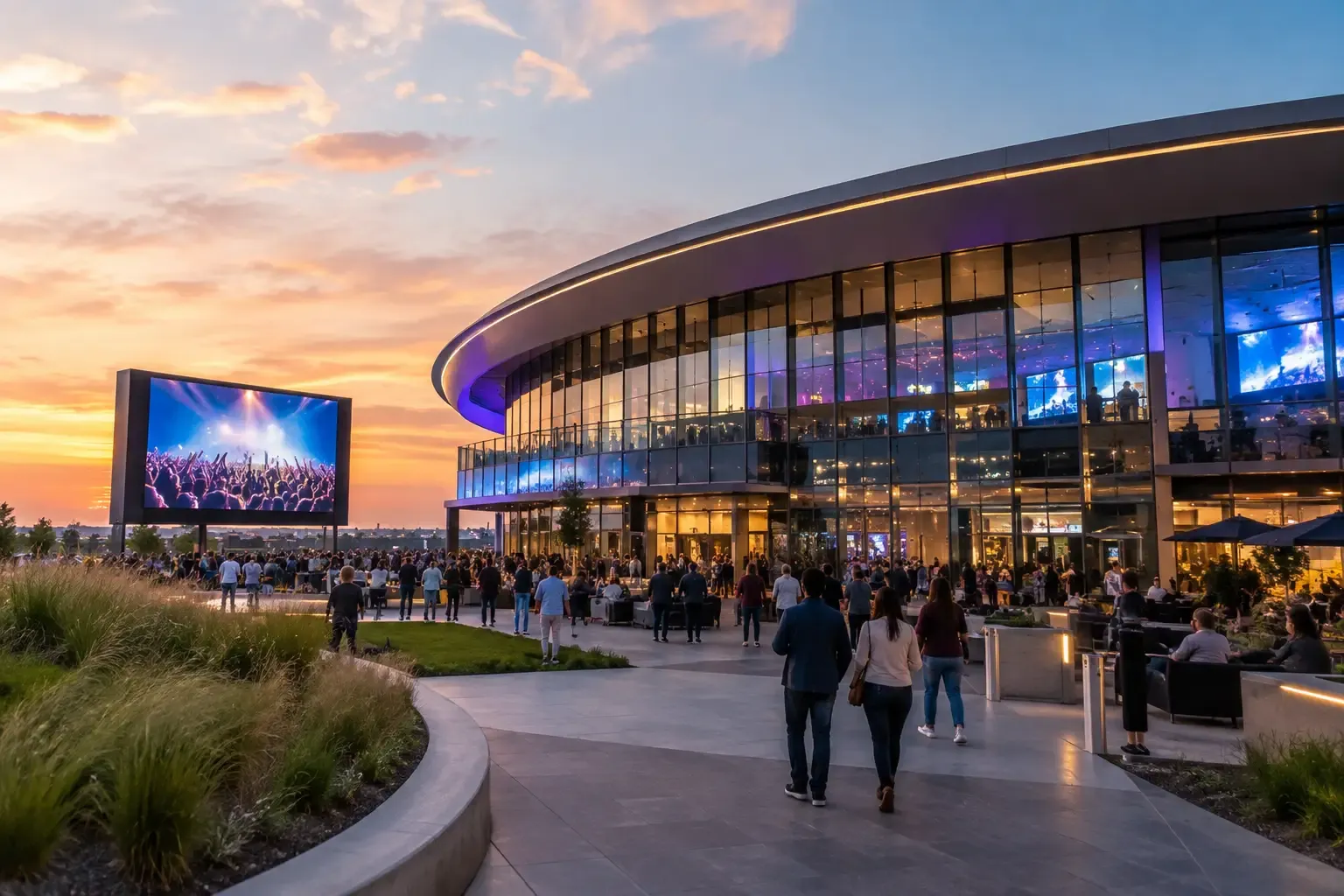
A packed Saturday night can hide a weak business model. A venue may have a line at the door, a full bar, and social media coverage, yet still lose money through poor labor deployment, low-spend guests, underperforming food, excessive comps, and equipment that cannot support the volume.
That is the real conversation around the future of entertainment venues. The next generation of successful concepts will not be defined by the flashiest technology or the loudest opening weekend. It will be built around repeatable guest demand, disciplined operations, and experiences that justify both the ticket price and the return visit.
For owners and operators, the question is not whether entertainment is growing. It is where the margin will come from when labor remains expensive, consumer expectations keep rising, and guests have more choices than ever.
The Future of Entertainment Venues Is About More Than Attractions
Entertainment venues are moving beyond a single-product model. A bowling center cannot rely only on lane revenue. A golf simulator concept cannot depend on hourly bay rentals. An arcade, music venue, family entertainment center, or immersive experience needs several ways for a guest to spend, stay, and return.
That does not mean every venue should add a full kitchen, craft cocktail program, retail wall, private-event sales team, and membership plan. Overbuilding is a common mistake. Every new revenue stream adds labor, inventory, training requirements, permitting considerations, and potential waste. The right mix depends on the trade area, guest occasion, square footage, hours of operation, and management depth.
The stronger model starts with a clear answer to a simple question: why will a guest choose this venue on a Tuesday, not just on a Saturday? If the answer is limited to novelty, the concept has a short runway. If the answer includes league play, date night, family occasions, corporate events, food and beverage, loyalty value, and a consistent service experience, the business has more room to perform.
Experience Design Must Carry Its Financial Weight
Guests are still willing to pay for an experience. They are less willing to pay for inconvenience, confusion, or an offering that feels interchangeable. The operators that win will design the entire visit, from booking to departure, instead of treating the attraction as the product and everything else as an afterthought.
A strong venue flow considers practical details. Can guests understand the check-in process within seconds? Is there a place to wait that encourages spending rather than frustration? Can a server reach tables without disrupting play? Does the bar support high-volume ordering during peak periods? Are restrooms, seating, sound, lighting, and sightlines appropriate for the intended audience?
These decisions affect revenue and labor at the same time. A poorly positioned service station adds steps to every shift. A bar built for visual impact but not production speed creates long ticket times. A kitchen that cannot execute a limited menu during a 200-person rush turns food into a guest complaint rather than a profit center.
The most effective entertainment venue layouts separate guest excitement from operational chaos. They create energy without making communication impossible. They encourage dwell time without trapping guests in bottlenecks. They also leave enough flexibility to adjust programming as demand becomes clearer.
Food and beverage are no longer secondary
For many entertainment venues, food and beverage is the clearest lever for increasing revenue per guest. It is also one of the easiest places to lose control. A menu designed to impress investors can overwhelm a small kitchen. A beverage program with too many slow-moving SKUs ties up cash and creates variance. A food offering that does not match the occasion can suppress spend even when execution is technically sound.
The answer is not a generic menu. It is a menu built for the venue's traffic patterns. Fast, shareable items may be right for a competitive socializing concept. A family entertainment center may need speed, familiar choices, and packaging that works around active guests. An upscale music or resort venue may need a more developed culinary point of view, but it still needs pars, prep, equipment, and staffing that support the promise.
Operators should track food and beverage attachment rate, average check by daypart, item mix, voids, comps, ticket times, and contribution margin by category. Sales alone do not tell the story. A high-volume item that consumes too much labor or creates inconsistent execution may need to be redesigned, repriced, or removed.
Technology Should Remove Friction, Not Create Another Project
The next wave of venue technology will be valuable when it solves an operating problem. Online reservations, waivers, event booking tools, mobile ordering, cashless payment, customer relationship management systems, and dynamic pricing can all improve performance. But technology does not fix an unclear concept or a poorly trained team.
Reservation data can help operators staff to actual arrival patterns, protect capacity for high-value bookings, and identify no-show behavior. Guest data can make marketing more targeted, particularly for birthdays, corporate events, league participants, and guests who have not returned. Point-of-sale reporting can identify when bar sales stall, which packages underperform, and whether discounts are driving incremental traffic or simply giving away margin.
The trade-off is implementation discipline. Every platform introduces subscriptions, integrations, staff training, data management, and failure points during service. Before adding a system, operators should define the decision it will improve. If no one will review the reports, change schedules, adjust offers, or follow up with guests, the software becomes another monthly expense.
Programming Will Matter as Much as Permanent Build-Out
A venue's physical attraction may get guests in the door, but programming gives them a reason to come back. The future belongs to operators who treat their calendar as a revenue tool, not a marketing afterthought.
Recurring programming can create predictable demand during softer periods: industry nights, league play, trivia, watch parties, live music, family sessions, skill-based competitions, tasting events, or seasonal packages. Private events should be designed with equal care. They need clear packages, minimums that protect margin, service standards, sales follow-up, and operational limits that prevent a buyout from damaging the regular guest experience.
Not every event is worth running. A packed room with discounted tickets, excessive security costs, overtime, and low beverage spend may generate noise without profit. Measure event-level revenue, labor, product cost, ancillary sales, guest acquisition, and repeat behavior. Then make decisions based on results, not just attendance.
Memberships and loyalty require a real value exchange
Membership models can improve cash flow and frequency, but they are not automatic wins. A membership that offers unlimited access during peak hours can crowd out full-price guests. A rewards program that relies only on discounts trains guests to wait for offers.
The better approach is to offer access, recognition, convenience, or exclusive programming. Early booking windows, preferred event access, member-only sessions, stored preferences, birthday benefits, and bundled credits can be more valuable than constant price reductions. The program must be simple enough for staff to explain and easy enough for guests to use.
Labor Will Separate Good Concepts From Good-Looking Concepts
Entertainment venues often require a broad mix of roles: hosts, game attendants, coaches, servers, bartenders, security, cooks, event staff, technicians, and managers. That complexity makes labor planning one of the biggest threats to profitability.
The operators who perform consistently will build labor models around demand patterns, not fixed habits. They will cross-train where it makes operational sense, establish opening and closing standards, and use clear shift leadership. They will also distinguish between hospitality roles that improve the guest experience and layers of staffing added because processes are broken.
Labor cuts can be necessary, but indiscriminate cuts are costly. Removing the wrong host, server, technician, or floor manager can increase wait times, reduce spending, weaken safety, and hurt the next visit. The goal is productive labor: the right people, in the right positions, at the right time, with standards they can execute.
This is where operator-level financial reporting matters. Weekly sales reports are not enough. Leadership needs to see labor by department and daypart, prime cost trends, revenue per labor hour, event profitability, cash controls, inventory variance, and break-even performance. Without that visibility, management is reacting after the month is already lost.
Build for Adaptability, Then Operate With Discipline
The future of entertainment venues will reward concepts that can evolve without reinventing themselves every season. Design flexible spaces. Select equipment that can be maintained locally. Keep menus and service models aligned with the actual business volume. Build a sales engine for groups and events before relying on walk-in traffic to carry the concept.
Most importantly, test the numbers before committing to the experience. Model conservative utilization, realistic labor, ramp-up periods, maintenance, licensing, insurance, marketing, and capital replacement. The guest may see an exciting night out. The operator must see every cost required to deliver it reliably.
A memorable venue is valuable. A memorable venue that produces clean financials, develops returning guests, and holds its standards on a difficult Friday night is the business worth building.