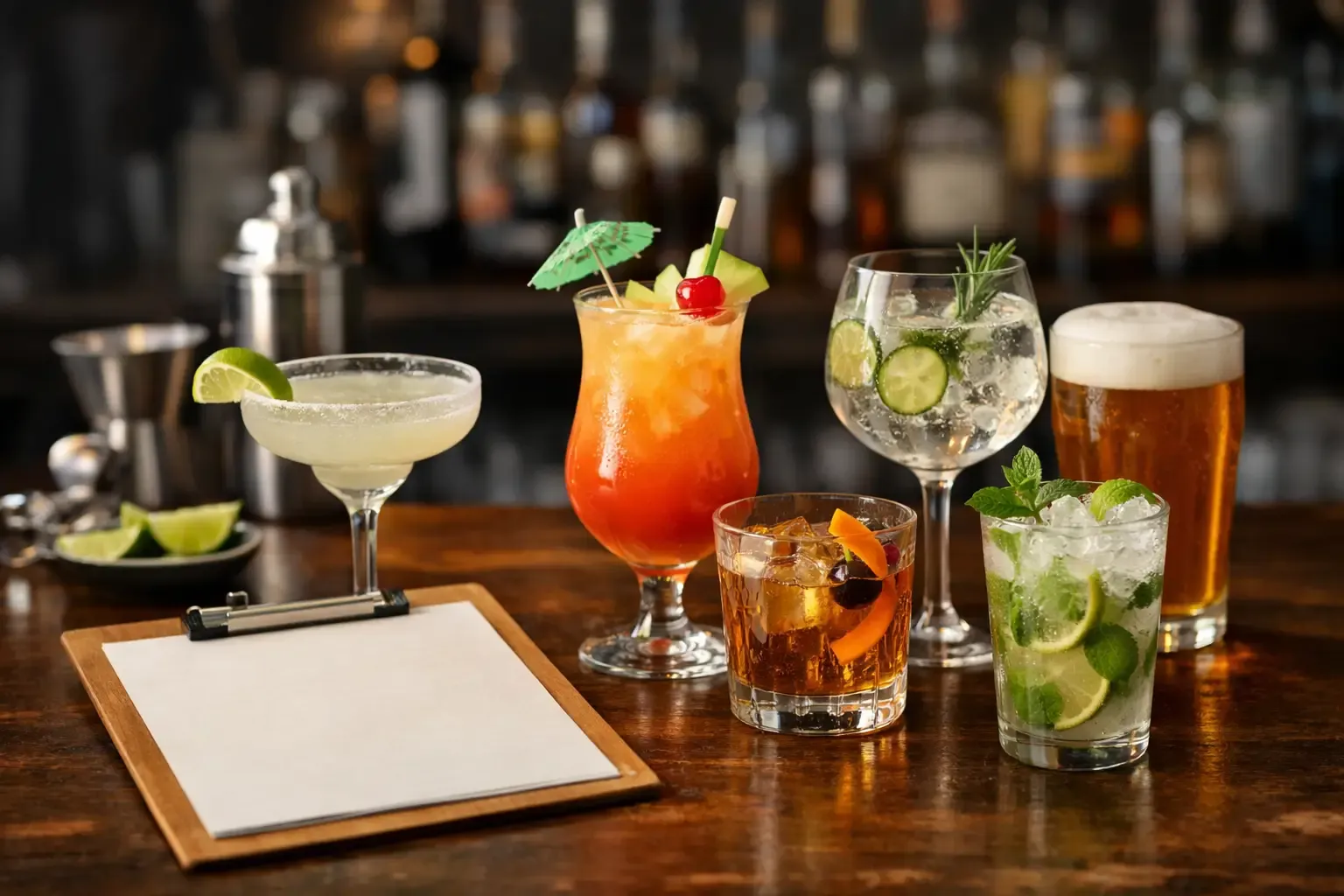
A beverage menu is not a mood board. It is a sales tool, a production system, and one of the fastest ways to improve or damage a bar’s profit picture. The best bar beverage menu ideas begin with an operator’s question: what can this team execute consistently, at the right cost, during the busiest 90 minutes of service?
A drink can look great on paper and still fail the business. If it requires six touches, a specialty garnish that spoils every weekend, and a bartender with three free minutes, it does not belong on a high-volume menu. A profitable program creates reasons to visit, gives guests clear choices, and protects speed, labor, inventory, and pour cost at the same time.
Build the Menu Around the Business You Actually Run
The right beverage menu depends on daypart, service model, check average, staffing depth, equipment, and guest expectations. A rooftop lounge can support a theatrical cocktail with a smoked presentation. A sports bar with a packed Saturday night needs drinks that move in under a minute. A hotel lobby bar may need an approachable list that works for travelers ordering alone, business groups, and guests waiting for dinner.
Start with the demand you can reasonably predict. Review point-of-sale sales by category, day, hour, and check. Look at what your guests already buy, not only what competitors post online. If tequila is carrying the category, there is a business case for a tight tequila section. If frozen drinks spike in warm weather but create ticket bottlenecks, the answer may be a batch system or a smaller frozen offering, not more frozen recipes.
Your beverage menu should have a job for every section. Premium cocktails raise check average and reinforce the concept. highballs and spritzes create easy entry points. Beer, wine, and zero-proof options prevent a group from losing choices. Shots, pitchers, or shareable formats can support late-night occasions when they fit the brand and local regulations. The mix changes by concept, but every item needs a commercial purpose.
Best Bar Beverage Menu Ideas That Drive Orders
The strongest menus give guests a few clear paths to purchase rather than asking them to decode a bartender’s creativity. Start with recognizable formats, then add a controlled point of difference.
Use familiar drinks with a house signature
Classic cocktails sell because the guest understands the promise. A margarita, old fashioned, espresso martini, mule, spritz, or ranch water needs little explanation. The opportunity is to make the build distinct without making it difficult.
That could mean a house citrus blend for margaritas, a properly batched old fashioned, a cold-brew espresso martini format, or a rotating seasonal spritz. Keep the core structure recognizable. When a guest sees a $16 cocktail with an unfamiliar name and no description, they may default to beer. When they see a familiar drink with one compelling detail, ordering friction drops.
Descriptions should answer practical questions: what is in it, how does it taste, and why is it worth the price? “Reposado tequila, roasted pineapple, lime, chile salt” is more useful than a clever name with no context.
Design one high-margin house serve
Every bar should have a house beverage that is easy to explain, attractive in the room, and profitable at scale. This may be a signature spritz, a draft cocktail, a vodka lemonade, a frozen drink, or a sparkling tequila serve. The format matters less than the system behind it.
Build it with controlled portions, ingredients that appear elsewhere on the menu, and glassware that can survive the operation. A house serve with a 16% to 20% beverage cost can be a powerful margin contributor, but only if staff can make it the same way every time. Pre-batching, prepped garnish, measured draft pours, and a written build spec are what turn an idea into a program.
Treat low- and no-proof drinks as a real category
Guests are not all choosing between water and a full-strength cocktail. They may be driving, pacing themselves, taking medication, training, pregnant, working early, or simply not drinking that night. A serious zero-proof offering protects the guest experience and keeps the check from collapsing.
Avoid filling this section with overly sweet soda combinations at premium pricing. Build two or three drinks with acidity, texture, bitterness, and thoughtful presentation. A ginger-citrus highball, a cucumber tonic with a nonalcoholic botanical spirit, or a blackberry tea spritz can feel intentional without demanding a separate prep kitchen.
Pricing requires judgment. Zero-proof beverages should reflect ingredients, labor, and presentation, but guests will resist paying cocktail pricing for juice and club soda. Use real cost data and local market context rather than applying a blanket price rule.
Make beer and wine easier to buy
Beer and wine menus often become inventory dumps. Too many package sizes, obscure styles, duplicate brands, and slow-moving wines create cash tied up in storage and excessive waste. A smaller, intentional list usually performs better.
For beer, cover the occasions your guests actually have: a familiar domestic option, a light craft or import lager, an IPA if the demand is there, and a few choices that match your food and market. For wine, offer a concise list by the glass that provides a clear price ladder. Include at least one trusted value choice and one credible trade-up option in each major style.
Do not confuse a broad selection with hospitality. Guests value a confident recommendation and an available product more than 40 labels with inconsistent inventory.
Engineer for Margin Before You Print
Menu price is only one part of profitability. The actual measure is what the drink costs after the correct recipe, portion, garnish, modifier, and waste are accounted for. A $15 cocktail can underperform if an unmeasured free-pour adds $1.50 of liquor to every build. A $9 draft beer can be a poor performer if line loss, overpours, and unrecorded comps are ignored.
Cost every recipe using current vendor pricing. Then set a target beverage cost by category, not one universal percentage. Well spirits, premium cocktails, wine by the glass, bottled beer, draft beer, and zero-proof drinks behave differently. Contribution margin matters as much as cost percentage. A higher-cost premium cocktail may contribute more gross profit dollars than a low-priced drink with an excellent percentage.
Use menu design to create a rational price ladder. If every cocktail is priced within one dollar, the guest has no meaningful trade-up path. If the gap between entry and premium choices is too wide, the middle disappears. Give guests room to select based on occasion and budget while keeping your best contribution items visible.
Protect Speed of Service and Product Integrity
A menu can be profitable in a spreadsheet and still be unprofitable during service. Before launch, test each item during a realistic shift simulation. Can two bartenders make the menu while taking food orders, answering guest questions, stocking glassware, and processing payments? Is there enough refrigeration for the prep? Does the garnish station stay clean? Can a new bartender follow the spec without improvising?
Limit single-use ingredients. If a syrup, puree, spice blend, or garnish appears in one cocktail only, it needs enough projected sales to justify its prep and waste. Cross-utilization is not a creative limitation. It is what keeps the program fresh without letting the walk-in become a graveyard for partial containers.
Batch where it improves consistency, but do it with controls. Label every batch with preparation date, recipe, yield, shelf life, and initials. Train the team on what can be batched safely and what must be added to order. Track sales against batch yield so missing product is visible instead of becoming a vague “bar variance.”
Train the Team to Sell the Program
The menu does not sell itself. Bartenders and servers need a concise recommendation for each featured item: who it is for, what it tastes like, and what makes it different. “If you like a margarita but want something lighter, try the house ranch water” is a better sales tool than reciting every ingredient.
Training should also cover execution standards. Use jiggers or calibrated pour systems, approved glassware, garnish placement, ice specification, and guest-facing language. If the drink changes depending on who is behind the bar, your cost model is fiction.
Review performance weekly for the first month, then at a regular operating cadence. Watch sales mix, gross margin dollars, voids, comps, waste, ticket times, and guest feedback. Remove weak items quickly. A menu is not a permanent declaration of taste. It is a controlled operating document that should improve as the business produces better data.
At Step It Up Strategies, we have seen the same pattern across high-volume bars, restaurants, hotels, and entertainment venues: the drinks guests remember are usually the drinks the operation can deliver without drama. Build a menu your team can execute at full speed, measure it without excuses, and give guests a reason to order the second round.